Log in / Sign in
5 MPH Truck Derate: Causes, Fault Codes & New 25 MPH EPA Update

A truck stuck in a 5 mph derate has traditionally been one of the most severe aftertreatment conditions a diesel truck operator can encounter. The engine may still run, but the vehicle can be electronically limited to approximately 5 mph after certain DEF or SCR faults remain unresolved long enough to trigger final inducement.
That strategy is now changing.
In August 2025, the U.S. EPA issued revised guidance allowing manufacturers to update SCR inducement software on eligible heavy-duty trucks. Instead of reaching a 5 mph limit within only a few hours, the updated strategy provides a much longer repair window and ultimately limits applicable heavy-duty trucks to 25 mph after 8,400 miles or 160 hours.
That does not mean the 5 mph derate has disappeared.
Depending on the engine, model year, and installed software calibration, a truck may still operate under the older 5 mph strategy or an updated inducement strategy. For truck owners and technicians in 2026, there is therefore a new question to ask:
Is this truck running the older 5 mph strategy or the newer 25 mph strategy?
Either way, the speed restriction is usually the result of an unresolved fault – not the original problem itself.
Why Is My Truck in Derate?
A severe truck derate is commonly triggered by unresolved problems involving the DEF, SCR, DPF, NOx sensors, dosing system, aftertreatment electronics, or related communication systems.
Common causes include low or contaminated DEF, DEF pressure or dosing problems, failed NOx sensors, low SCR efficiency, excessive DPF restriction, wiring faults, CAN communication problems, and repeated emissions-related fault conditions.
5 mph or 25 mph tells you how severely the truck is being limited. It does not tell you which component caused the problem.
That distinction can prevent a lot of unnecessary parts replacement.
5 MPH vs. 25 MPH Derate: What Changed?
Historically, certain unresolved DEF-related faults could progress to a final vehicle-speed limitation of approximately 5 mph within about four hours.
EPA’s August 2025 guidance provides manufacturers with an alternative strategy for applicable heavy-duty truck and tractor engines.
| Inducement Stage | Updated EPA Guidance for HD Trucks |
| Initial | 650 miles or 10 hours – 15% ramped torque reduction |
| Secondary | 4,200 miles or 80 hours – 30% ramped torque reduction |
| Final | 8,400 miles or 160 hours – 25 mph speed limit |
| Previous final strategy | Approximately 5 mph after 4 hours |
The purpose is to give operators substantially more time to diagnose and repair DEF/SCR problems before the truck reaches a severe operating restriction. EPA has described the change as an effort to reduce sudden speed and power losses while preserving emissions requirements.
Does Every Truck Now Use the 25 MPH Limit?
No.
EPA guidance allows manufacturers to develop and implement revised strategies; it does not automatically reprogram every truck already on the road. The applicable strategy can depend on the engine, vehicle, model year, and software installed in its control modules.
That means two trucks experiencing similar DEF/SCR problems may behave differently. One may eventually reach a 5 mph limit, while another may progress through torque reductions before reaching 25 mph. This makes software identification and fault interpretation increasingly important during diagnosis.
What Actually Causes a Severe Derate?
A severe inducement should be viewed as the end of a chain rather than the beginning of the diagnosis.
- Older strategy: Fault detected → Warning → Torque reduction → Severe inducement → 5 mph
- Updated EPA-guidance strategy: Fault detected → Warning → 15% torque reduction → 30% torque reduction → 25 mph final inducement
The original fault may have occurred long before the final speed restriction appeared.
DEF Level and Quality Problems
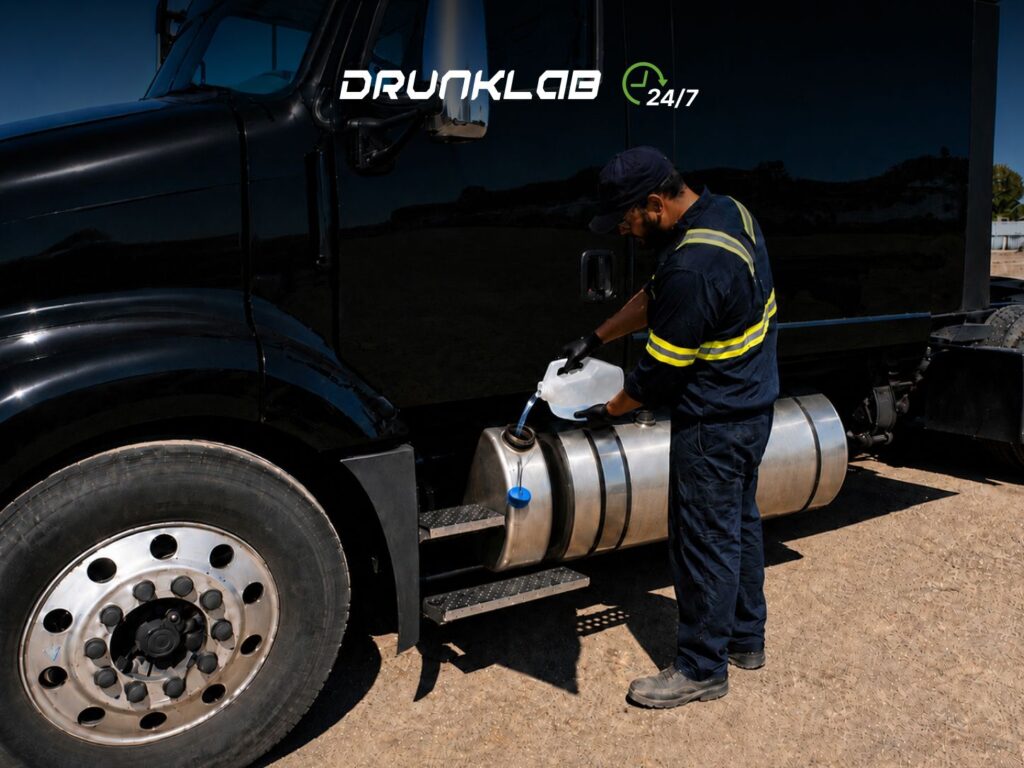
Low DEF is one of the simplest potential causes, but a DEF-related derate is not necessarily fixed by filling the tank.
The control system also needs to determine that the DEF level and system operation are acceptable. Contaminated, diluted, improperly stored, or otherwise out-of-spec DEF can create additional problems.
A dashboard showing a full DEF tank therefore does not prove that the entire DEF system is functioning correctly.
DEF Pressure and Dosing Problems
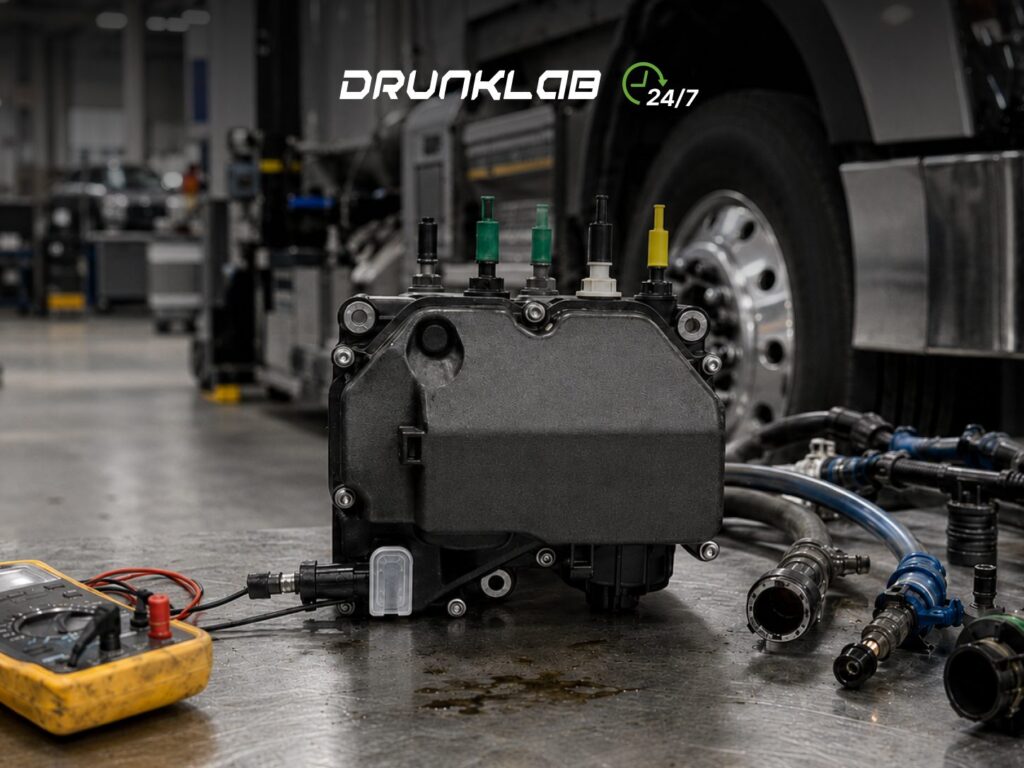
The DEF system must deliver the correct amount of fluid under the correct operating conditions. Problems may involve the pump, dosing valve, pressure control, electrical supply, crystallization, wiring, or other components. This is where parts swapping can become expensive.
A DEF pressure code does not automatically mean: “Replace the DEF pump.”
Proper diagnosis may require commanded-pressure testing, electrical verification, and comparison of requested versus actual dosing-system performance.
NOx Sensor and SCR Efficiency Faults
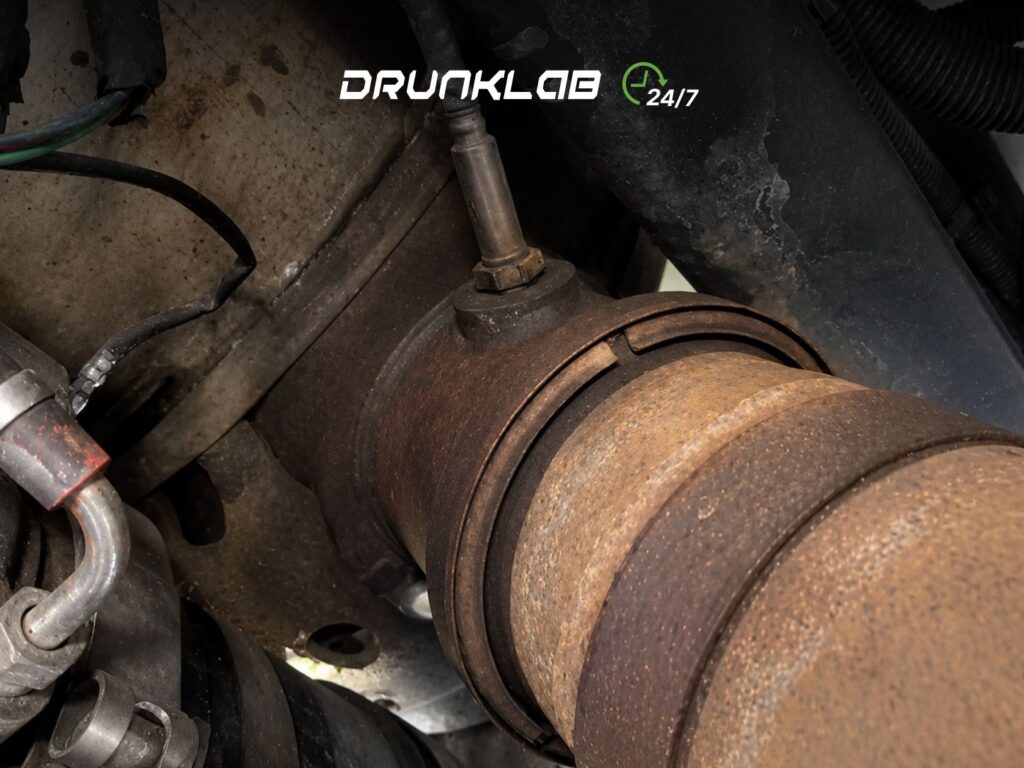
NOx sensors play a major role in determining whether the SCR system is reducing NOx as expected.
But an SCR efficiency fault does not automatically mean that the SCR catalyst is bad.
Possible causes can include incorrect DEF dosing, poor DEF quality, NOx sensor problems, exhaust-temperature conditions, exhaust leaks, wiring faults, or deterioration of the catalyst itself.
Codes such as SPN 3364 and SPN 4364 may appear in this part of the diagnostic chain, depending on the engine and emissions platform. These codes must be interpreted within the complete fault stack rather than in isolation.
DPF and Regeneration Problems
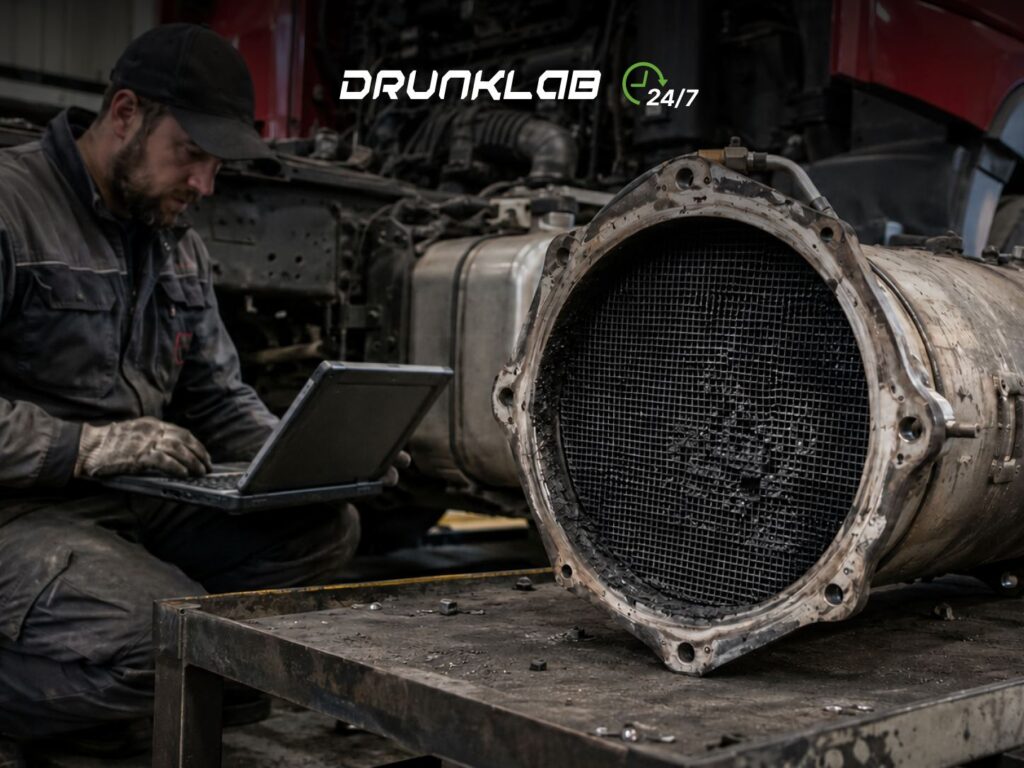
Although severe inducement is frequently associated with DEF and SCR faults, DPF problems can also contribute to derate conditions.
Excessive soot loading, high differential pressure, failed regeneration, exhaust-temperature sensor problems, ash accumulation, or another engine condition producing excessive soot may all become relevant.
Repeated forced regenerations are not a universal solution.
If the underlying problem is electrical, mechanical, sensor-related, or associated with the dosing system, another forced regen may accomplish very little.
Common Fault Codes Associated With Truck Derate
There is no single universal “5 mph code.” The actual fault-code combination depends on the manufacturer, engine, emissions generation, and programming.
Heavy-duty diesel technicians may encounter some of these common codes:
| Code / SPN | General Area | Possible Issue |
| SPN 5246 FMI 0 | SCR inducement | Severe aftertreatment/SCR inducement |
| SPN 4364 | SCR efficiency | SCR system performance/efficiency |
| SPN 4374 | DEF system | DEF pump/dosing-related condition on applicable platforms |
| SPN 5392 | DEF level | DEF level/quantity condition on applicable platforms |
| SPN 1761 | DEF level | DEF tank level-related condition on applicable platforms |
| SPN 5394 | DEF dosing | DEF dosing valve/injector-related condition on applicable platforms |
These are examples, not a universal diagnostic chart. The same SPN can have different diagnostic implications depending on FMI, engine manufacturer, model year, and software mapping. Always interpret the complete SPN/FMI combination together with the OEM diagnostic information.
IMPORTANT: A derate code is not necessarily a failed-part code. For example, SPN 5246 FMI 0 can indicate that the SCR inducement has reached a severe level, but it does not by itself prove that the DEF pump, SCR catalyst, or NOx sensor is defective. Always identify the initiating fault before replacing expensive aftertreatment components.
Why Derate Diagnosis Gets Complicated Fast
This scenario is where a seemingly simple “truck won’t go over 5 mph” complaint becomes a much larger diagnostic problem.
Modern heavy-duty trucks can involve several interconnected control systems, including the ECM/EMS, ACM, VECU, NOx sensors, DEF system, aftertreatment sensors, and other modules communicating over the vehicle network.
Proper diagnosis may require reviewing active and inactive fault codes, complete SPN/FMI combinations, module data, live parameters, DEF pressure and dosing, upstream/downstream NOx behavior, DPF data, exhaust temperatures, electrical supply, CAN communication, and inducement status.
And collecting the data is only half the job.
The difficult part is determining which fault started the sequence and which codes appeared afterward as consequences.
For example, abnormal SCR efficiency could originate from a NOx sensor, DEF dosing, exhaust temperature, wiring, an exhaust leak, or the catalyst. A communication failure can even make a functioning DEF component appear to have failed.
Expert Insight
When several DEF, SCR, DPF, and inducement codes appear together, the most recent or most visible code is not necessarily the root cause.
Inactive codes can be particularly valuable because they may show what happened before the truck reached severe inducement.
This is why clearing everything before recording the complete fault history can actually make diagnosis harder.
What Should You Check First?
If a truck is already limited to 5 mph, follow a logical diagnostic sequence rather than replacing parts based on the first code displayed.
Step 1: Read All Modules
Do not scan only the engine ECM.
Depending on the truck, scan the relevant:
- Engine module
- Aftertreatment module
- Vehicle control module
- Instrumentation
- Other connected modules
Save both active and inactive/history codes before clearing anything.
The sequence of faults can be extremely useful.
Step 2: Record the Complete SPN/FMI or DTC
A code without its FMI or complete diagnostic suffix may not provide enough information.
For example:
SPN 5246 is not the same diagnostic information as SPN 5246 FMI 0
Likewise, manufacturer-specific diagnostic codes may contain additional information that a generic scan tool does not display.
Step 3: Check DEF Level and Quality
Verify:
- Actual DEF level
- DEF quality
- Tank sensor operation
- DEF concentration where applicable
- Signs of contamination
- Crystallization
- DEF tank wiring
- Tank heater operation where applicable
Check the sensor and electrical system if the DEF level shown on the dashboard does not match the actual tank condition.
Step 4: Check DEF Pressure and Dosing
If the system reports a dosing or pressure problem, look at the following:
- DEF pump
- DEF lines
- Doser
- Doser connector
- Pump electrical supply
- DEF pressure
- Crystallization around the injector
- Pump performance during an active test
A full DEF tank does not rule out a failed pump or dosing system.
Step 5: Check NOx Sensor Data
Look at live data rather than relying only on fault codes.
Compare:
- Upstream NOx
- Downstream NOx
- Exhaust temperature
- DEF dosing status
- Engine operating conditions
If the NOx readings are unrealistic, unstable, or otherwise inconsistent with the operating conditions, inspect the sensors and their circuits.
Step 6: Inspect the DPF and Exhaust System
Check:
- DPF differential pressure
- Soot load
- Ash load
- Exhaust temperature sensors
- Exhaust leaks
- Regeneration history
- Regeneration status
A restricted DPF or failed regeneration can create a chain of problems that eventually results in a severe derate.
Step 7: Inspect Wiring and Connectors
Pay particular attention to:
- DEF tank connectors
- NOx sensor harnesses
- DEF pump wiring
- Doser wiring
- ACM/aftertreatment connections
- Grounds
- Battery voltage
- CAN communication
Intermittent electrical problems can be especially difficult because the component may work normally during a quick inspection.
What Does SPN 5246 Mean?
SPN 5246 is commonly associated with SCR inducement severity on heavy-duty diesel applications.
SPN 5246 is generally an inducement/result code, not a failed-component diagnosis.
SPN 5246 FMI 0 may reflect a high level of SCR inducement. It, however, cannot ascribe failure to the DEF pump, NOx sensor, SCR catalyst, or any other component.
The initiating faults need to be identified.
Why Doesn’t the Derate Disappear After the Repair?
Another common situation is that the failed component has been repaired and the original fault appears to be gone, but the truck is still derated. That can happen because repairing the original problem and exiting an established inducement state are not necessarily the same process.
Depending on the vehicle, recovery may require:
- A successful validation test
- A drive cycle
- A specific aftertreatment test
- A reset procedure
- A module relearn
- An OEM diagnostic routine
- A defined number of successful engine starts
Volvo documentation, for example, describes specific exit conditions for a 5 mph DEF-quality inducement and notes that certain situations can require a diagnostic tool to exit the final speed-limit state.
Therefore, “the code is gone” and “the derate has been properly reset” are not necessarily the same thing.
Can a Basic Scanner Clear a 5 MPH or 25 MPH Derate?
It depends on the truck. Sometimes a basic scanner can read generic emissions codes. That does not mean it has sufficient access to diagnose or recover a severe inducement.
Although a basic OBD scanner may read generic emissions codes, it may not have access to manufacturer-specific inducement controls needed to complete the entire repair procedure.
Heavy-duty diagnostic equipment may be required to:
- Read all relevant modules
- Access OEM-specific fault information
- Run DEF system tests
- Perform dosing tests
- Run regeneration procedures
- Reset aftertreatment maintenance values
- Perform NOx-related resets
- Complete inducement recovery procedures
The correct procedure depends on the specific truck and engine.
The better question is not: “Can my scanner clear the code?”
It is: “Do I have enough information to identify what actually caused the derate and determine what the truck needs next?”
For many owners, that is the point where remote professional diagnosis becomes considerably more practical than continuing to replace components based on individual codes.
5 mph Derate on Volvo and Mack Trucks
On Volvo Group vehicles, the aftertreatment system can involve multiple modules and sensors working together.
A typical diagnostic path may involve:
ECM → ACM → DEF system → NOx sensors → SCR catalyst → VECU/instrumentation
The exact architecture varies by generation.
Volvo documentation confirms that both DEF quality and DEF tank level can lead to a 5 mph speed limitation under certain inducement conditions.
This is particularly important for Volvo and Mack technicians because a message such as:
“ENGINE IN DERATE – SERVICE DEF – 5 mph LIMIT”
should not be interpreted as simply “replace the DEF pump.”
The complete fault stack needs to be evaluated.
What Not to Do When a Truck Is Stuck at 5 mph
Avoid these common mistakes:
Do not replace parts based on one code
A single code can be the final result of a much larger problem.
Do not repeatedly clear the codes
Clearing codes without fixing the cause can make the diagnostic history harder to interpret.
Do not assume the DEF pump is bad
DEF pressure problems can be caused by wiring, connectors, restrictions, control issues, or component failures.
Do not assume a NOx sensor is bad because an SCR code is active
NOx sensors are part of the diagnostic chain, but SCR efficiency faults can have multiple causes.
Do not perform repeated forced regenerations without diagnosis
A regeneration is not a substitute for repairing a failed sensor, dosing system, pressure problem, or electrical fault.
Do not ignore inactive codes
A code that is no longer active can still explain how the truck reached the inducement state.
A Practical 5 mph Derate Diagnostic Checklist
Before replacing expensive components, verify:
DEF system
- DEF level
- DEF quality
- DEF contamination
- DEF pump
- DEF pressure
- DEF doser
- DEF lines
Sensors
- Upstream NOx sensor
- Downstream NOx sensor
- Exhaust temperature sensors
- DPF differential pressure sensor
- DEF level/quality sensors
Aftertreatment
- DPF soot load
- DPF restriction
- SCR efficiency
- Exhaust leaks
- Regeneration history
Electrical
- Battery voltage
- Grounds
- Power supplies
- Connectors
- Harnesses
- CAN communication
Diagnostics
- Active codes
- Inactive codes
- SPN/FMI combinations
- Freeze-frame data
- Live sensor data
- OEM diagnostic tests
- Inducement reset/recovery procedure
Remote Derate Diagnosis With DrunkLab
If your truck is already stuck at 5 mph – or is operating under a newer inducement strategy – you do not necessarily need to start replacing DEF pumps, NOx sensors, or aftertreatment components based on guesswork.
DrunkLab provides a free fault-code reading service through the Mochester App (M4 App). For supported applications, the vehicle can be connected so that active and inactive fault information can be collected and reviewed remotely.
The purpose is to understand why the truck reached the inducement state before deciding what needs to happen next.
For supported Volvo Group trucks, DrunkLab also provides remote tuning solutions related to emission derate and other DPF, SCR/DEF, EGR, and VGT functions.
A derate solution should not be treated as a repair for an unrelated mechanical or electrical failure. If the truck has an underlying engine, wiring, communication, or other hardware problem, that problem still needs to be addressed.
Volvo and Mack: Software Updates Matter More in 2026
For Volvo and Mack owners, identifying the installed software strategy is becoming increasingly relevant.
Mack announced in July 2026 that it was expanding updated DEF inducement software across its vehicle portfolio. The company said implementation began in May 2026 on certain new models with MP13 engines, with broader availability planned for eligible older vehicles through 2027, eventually extending to eligible post-2010 vehicles.
This means a technician should no longer assume that every Volvo Group truck encountering a severe DEF/SCR fault will follow exactly the same inducement sequence.
Model year + engine + calibration + active faults all matter.
Could DEF Derates Eventually Disappear?
Possibly – but they have not disappeared yet.
In July 2026, EPA proposed going considerably further than the 25 mph strategy.
The proposal would replace required engine derates and vehicle-speed reductions associated with SCR/DEF inducement on newly manufactured affected diesel engines and vehicles with visible and/or audible notifications. EPA is also considering how similar changes could potentially be made available to engines and vehicles already in use.
That proposal should not be confused with the current 25 mph strategy.
| Situation | What It Means |
| Older calibration | Severe inducement may still reach 5 mph. |
| Updated EPA-guidance strategy | Applicable heavy-duty trucks may ultimately reach 25 mph after 8,400 miles or 160 hours. |
| July 2026 EPA proposal | EPA proposes eliminating required DEF-related derates and speed restrictions for newly manufactured affected engines and vehicles in favor of warnings. |
The July 2026 action remains a proposal, not a finalized requirement.
The Bottom Line
A truck stuck at 5 mph – or eventually limited to 25 mph under an updated strategy – should not automatically send you shopping for a DEF pump, NOx sensor, DPF, or SCR catalyst.
The speed restriction is the result.
The real question is what caused the control system to reach that inducement level.
And in 2026, there is another layer to the diagnosis: determining which inducement software strategy the truck is actually using.
Modern aftertreatment diagnosis can involve multiple modules, dozens of related parameters, active and inactive fault histories, live sensor data, OEM-specific procedures, and software calibration differences.
You can work through all of that individually.
Or you can start by getting the truck’s actual diagnostic picture reviewed before spending money on parts that may not solve the problem.
Need Help With a 5 MPH or 25 MPH Derate?
If your Volvo or Mack truck is stuck in derate, you can instantly pull and review active fault data yourself using the Mochester App for supported vehicles and help determine what is actually happening before you start replacing expensive components
The first step is simple: read the truck before guessing what’s wrong with it.
FAQ
Is 5 mph still the final derate speed on every truck?
No. Some trucks can still use the traditional 5 mph final inducement strategy, while applicable trucks with updated manufacturer software may use the newer strategy that ultimately reaches a 25 mph limit. The engine, model year, and installed calibration need to be considered.
Why is my truck limited to 25 mph?
For an applicable heavy-duty truck using the revised inducement strategy, 25 mph can represent the final stage reached after an unresolved DEF/SCR condition has progressed through the warning and torque-reduction stages. The speed limit itself does not identify which component failed.
What does SPN 5246 mean?
SPN 5246 is associated with SCR inducement severity on many applications. It should not automatically be interpreted as a failed DEF pump, NOx sensor, or SCR catalyst. The complete SPN/FMI and associated faults need to be evaluated.
Why is my truck still derated after the fault was repaired?
Some systems require successful validation, a drive cycle, an aftertreatment test, relearn, reset, or OEM diagnostic procedure before leaving a confirmed inducement state. Clearing the fault memory alone may not be enough.
Can DrunkLab diagnose a derate remotely?
For supported vehicles, DrunkLab can use diagnostic information collected through the Mochester App to review active and inactive faults and determine which systems are involved. Physical component failures may still require on-truck inspection or testing.
By The DrunkLab Team
Last updated: September 3, 2026