Log in / Sign in
Exploring EGR in Diesel Trucks: Purpose, Types, and Malfunction Management
What purpose does the EGR system serve in diesel trucks?
An Exhaust Gas Recirculation (EGR) system is a technology that controls emissions in diesel trucks by reducing nitrogen oxide (NOx) emissions. This system lowers the temperatures of the combustion process and decreases negative emissions, by putting some of the exhaust gases back into the intake of the engine.
Introduction
This article contains trucks Exhaust Gas Recirculation (EGR) system detailed examination. We will explore its purpose, design, various valve types, features of high- and low-pressure systems, and combined solutions. Special attention will be given to signs of malfunctions, diagnostic methods, and the critical pros and cons of disabling the EGR system.
EGR System Purpose
The technology first appeared in North American gasoline engines during the 1970s, soon spreading to diesel powertrains in the 1990s, especially heavy-duty trucks. By advancing the timing of combustion and lowering peak cylinder temperatures, the system achieves a significant reduction in NOx without adding a secondary after-treatment stage. By diluting the intake air-fuel mixture, the valve decreases the oxygen content, cools the combustion flame, and can cut NOx emissions by up to 70%.
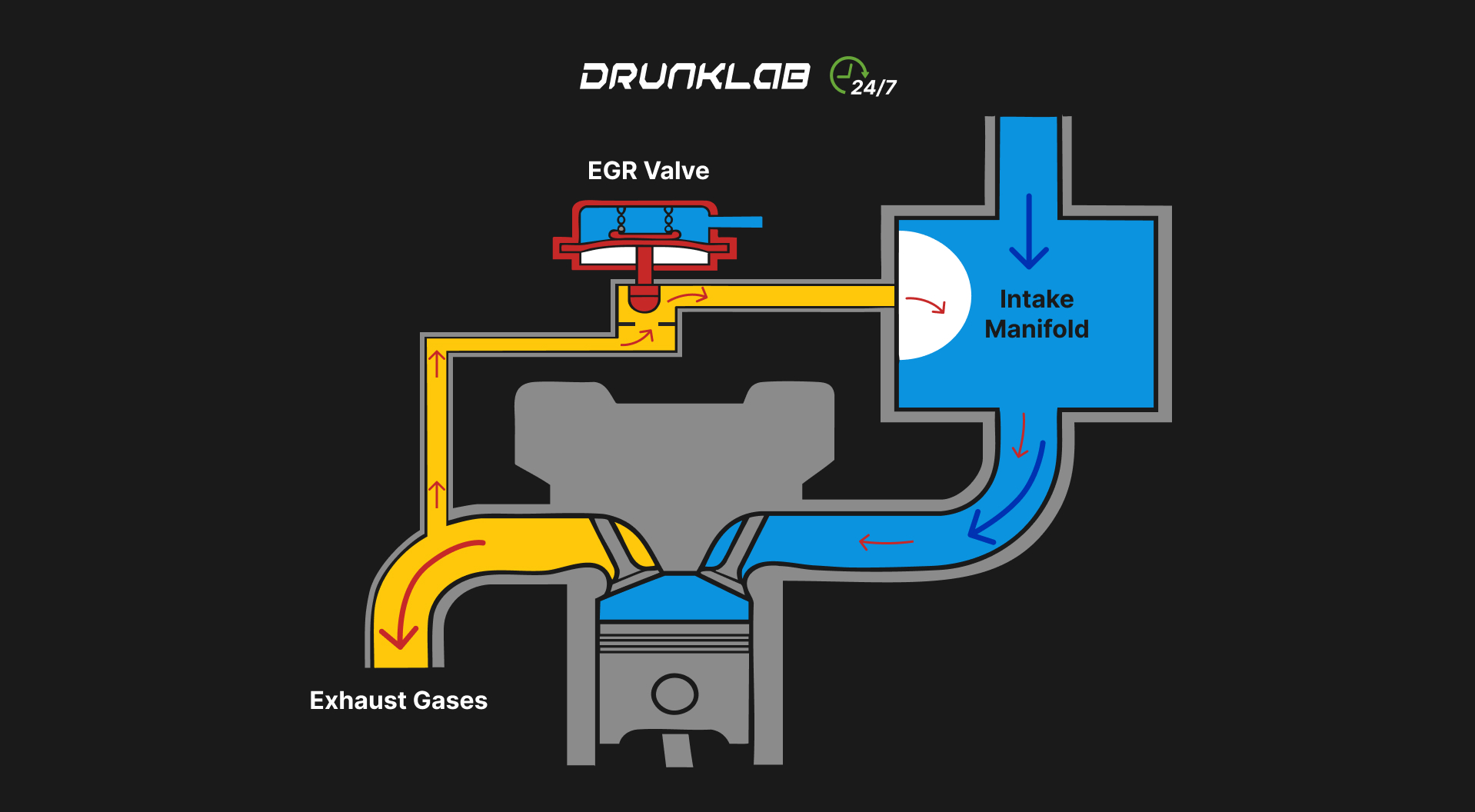
EGR Valve General Diagram
(Figure 1)
The EGR valve fine-tunes the oxygen level in the charge air whenever the engine runs, depending on the current load and thermal state:
- Initial start and warm-up
- Partial or low load
- Stable RPM
- High or low atmospheric pressure
EGR Valve Design & Operating Principle
The EGR valve is a housing containing a stem that opens or closes an aperture for the passage of exhaust gases. The valve is attached to the stem, which operates either pneumatically, driven by vacuum (see Figure 2), or electrically, controlled by the Electronic Control Unit (ECU).
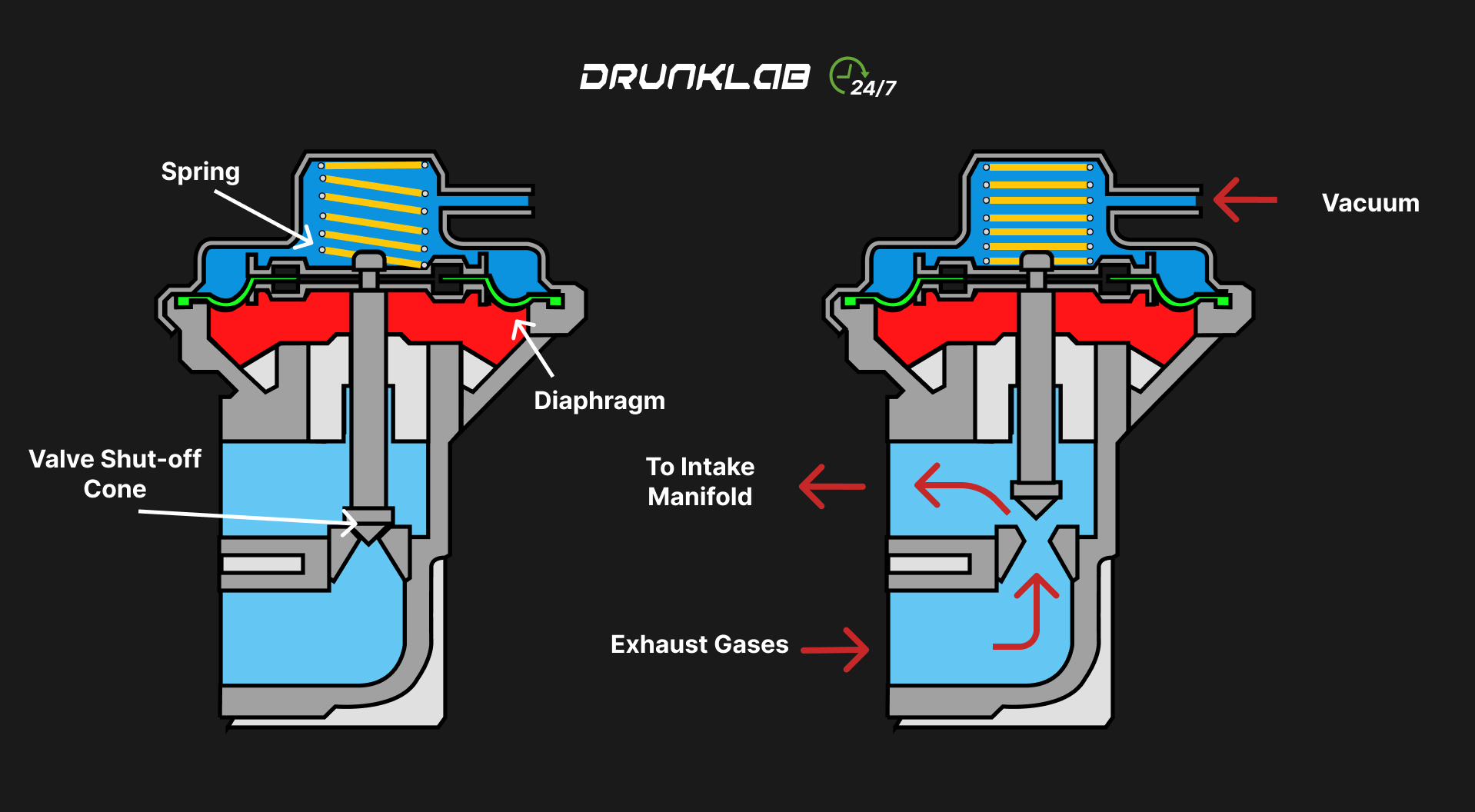
Pneumatic EGR Valve General Design
(Figure 2)
EGR Valve Types by Cooling Method
- Without Cooling
Simple valves where exhaust gases enter the intake manifold without additional cooling. Found in older trucks.
Advantage: Simple design.
Disadvantage: Relatively low performance against NOx emissions. - With Cooling
Modern trucks are equipped with coolers that lower the temperature of recirculated gases using antifreeze or air (see Figure 3).
Advantage: Significant reduction in emissions.
Disadvantage: System complexity and susceptibility to contamination.
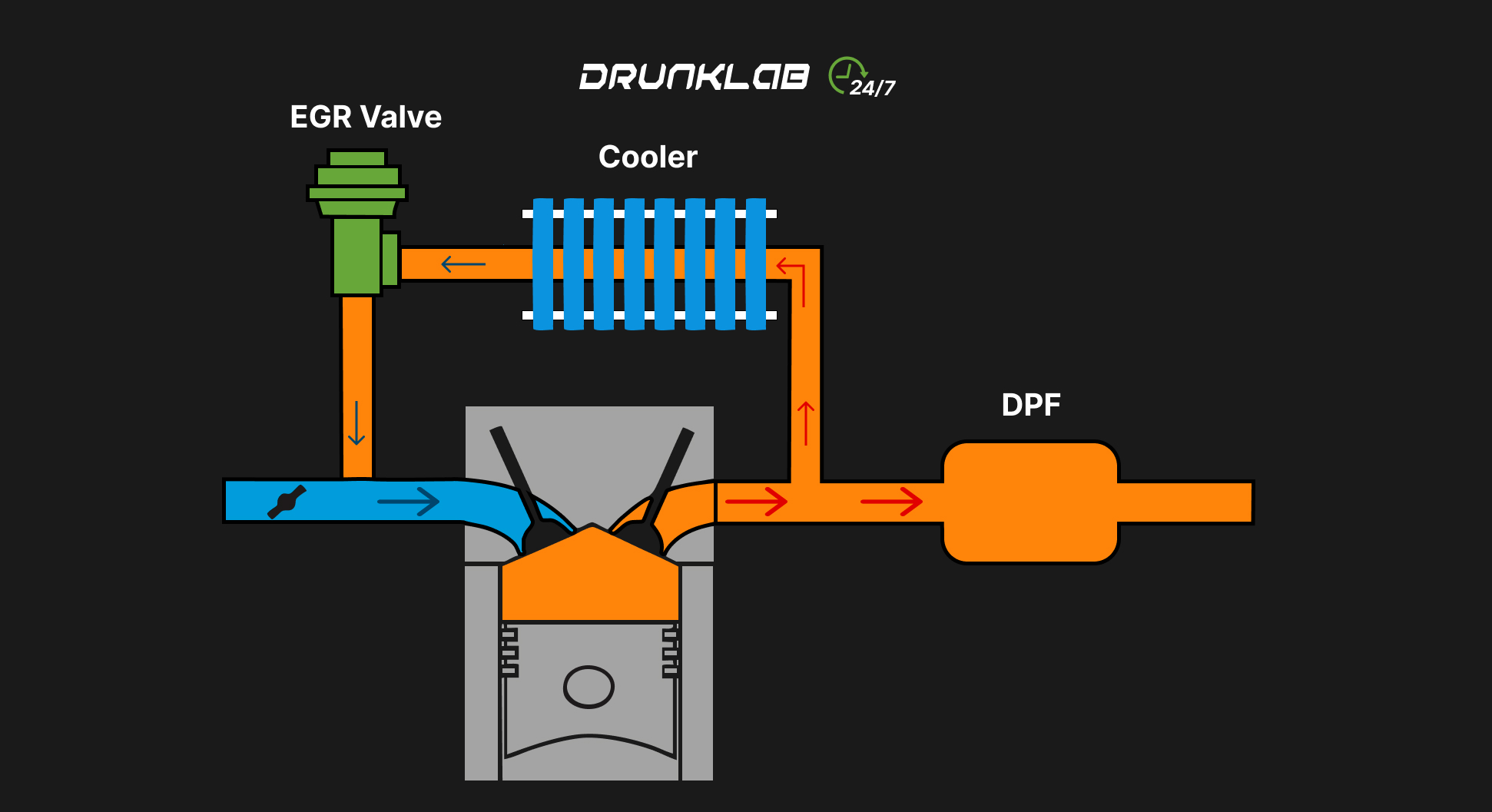
EGR Valve with Cooler
(Figure 3)
- With Bypass Valve
Employed in cooled systems. The bypass design circulates exhaust around the intercooler during cold engine operation. This lets the system warm faster, reducing unburned-fuel emissions and increasing operational efficiency during warm up to normal temperatures. - Advantage: Optimizes engine operation during cold starts.
Disadvantage: Extra parts make the system more complicated to manage.
By Position & Design
- Internal EGR Systems
The loop is built in using cam or variable timing, so there’s no stand-alone actuator. This approach is relatively rare in heavy trucks.
Advantages: No separate valve, high reliability.
Disadvantages: Complex tuning, limited application. - External EGR Valves
This is a standard design that connects the exhaust and intake manifolds with a separate channel. This design is most prevalent among trucks.
Advantages: Easy maintenance and replacement.
Disadvantages: Susceptibility to soot buildup in channels.
EGR Valve Control Types
- Pneumatic (Vacuum)
Mainly regarded as obsolete. Intake manifold vacuum moves the valve, with a differential pressure sensor providing limiting feedback (see Figure 4).
Advantages: Simplicity, low cost.
Disadvantages: Less precise control, sensitivity to contamination.
Pneumatic EGR Valve
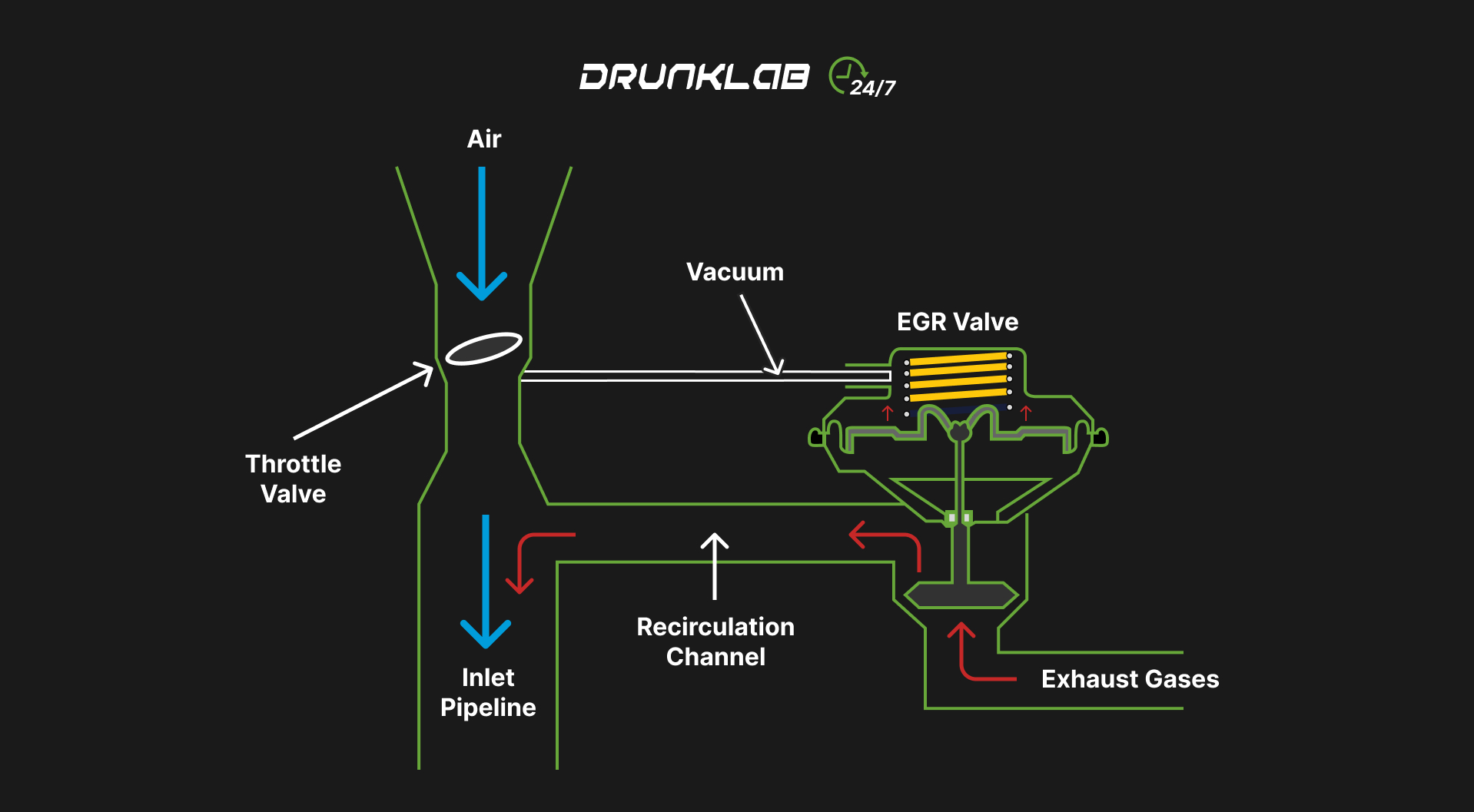
(Figure 4)
- Electronic EGR
The Most popular today. The kind of valve is actuated by a solenoid or stepper motor, controlled by the ECU based on sensor data.
Advantages: Precise gas metering, adaptability.
Disadvantages: Complex design, high replacement cost.
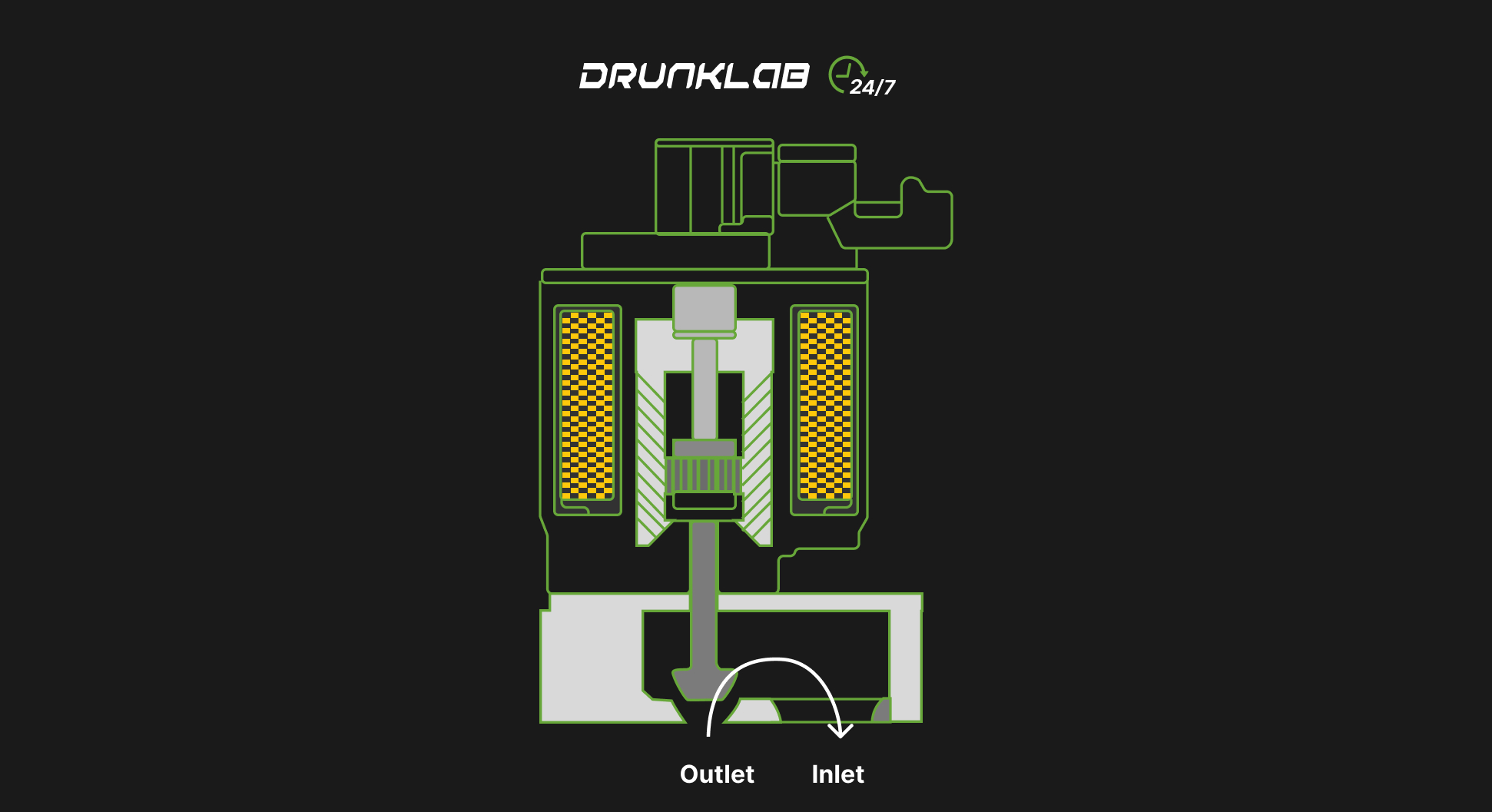
Electronic EGR Valve
(Figure 5)
Regardless of design, all EGR valves operate on the same principle. The difference lies only in the method of actuating the sealing element.
Types of Diesel Engine Recirculation Systems
- High-Pressure EGR Valve (HP-EGR)
Used in Euro-4 engines, where NOx emissions must not exceed 0.25 g/km. The system includes a pneumomechanical or electrically driven EGR valve and pipelines. The vacuum is created at the inlet to the exhaust manifold by the vacuum pump. The level of exhaust gas recirculation is dependents on the mode of operation of the engine and the differential pressure between the intake and the exhaust. - Low-Pressure EGR Valve (LP-EGR)
Complies with Euro-5 standards (NOx ≤ 0.18 g/km). Exhaust gases pass through a particulate filter for cleaning, then to a cooler for cooling, after which the EGR valve controls their dosage before entering the exhaust manifold. - Combined Recirculation EGR Valve
To meet Euro-6 standards (NOx ≤ 0.08 g/km), engines use a combined exhaust gas recirculation system. Its design includes two separate pipelines: low and high pressure. The operating cycle resembles LP-EGR, but in certain engine modes, the high-pressure circuit is activated to supply additional uncooled gases.
Signs of EGR Malfunction
Carbon buildup is the main reason why EGR valves fail, which causes them to jam. Watch the following signs in your truck:
- “Check Engine” light on for no reason.
- Reduced engine power, hesitation.
- Rough engine idling.
- Jerking during sudden acceleration.
- Increased fuel consumption.
- Detonation, knocking, or clicking in the engine.
Causes and Consequences of EGR Failure
Causes of Malfunction:
- Soot and deposit buildup on components.
- Use of low-quality fuel.
- Incomplete fuel combustion.
- Insufficient crankcase ventilation.
- Malfunction of vacuum or digital pump.
- EGR valve burnout.
- Clogged pipelines.
- Electronic control system failures.
- Manufacturing defects.
Consequences of Failure:
Running a defective EGR valve for an extended period has serious ramifications: Excessive wear of the cylinder-piston assembly and the turbo will generate oil to leak past the seals, leading to sludge buildup and possible valve stem sticking.
Erratic sensor readings will skew the ECU’s corrective responses, pushing the valve to behave incorrectly. The engine may also tolerate higher fuel quantities when the EGR flow is miscalibrated, pushing fuel economy downward.
EGR System Diagnosis & Repair
- Visual Inspection
Check the pipelines and connections for any changes in form or mechanical issues, damaged electrical connectors, and build up of carbon. - In-Depth Service Diagnosis
Utilize the multimeter, oscilloscope, and the other tools for precise diagnosis. Specialists check EGR components, wire resistance, intake pressure, air consumption, and ECU signal accuracy. - Computer Diagnostics
The most accurate approach. Computed diagnostics can verify that engine problems are the result of an EGR part failure manifested by low exhaust gas return intensity or leaks in the intake system. - Repair and Replacement
Due to low repairability, most EGR components require replacement. The valve itself can often be restored by cleaning. New components may need to be programmed into the ECU using a diagnostic scanner after the replacement.
EGR Delete: Pros & Cons
Arguments for Disabling EGR:
- Engine efficiency was enhanced by reducing the unburned combustion residues pollution in the cylinder.
- Less carbon build-up in the intake system.
- Engine operates at a lower temperature.
- Improved throttle response.
- Reduced average fuel consumption.
- Simplified engine system design and maintenance.
- Less labor costly cleaning and replacement.
- Saving on parts cost for a long time.
Arguments Against Disabling EGR:
- Increased NOx emissions.
EGR Delete Methods
- Mechanical Deletion: For pneumatic EGR, remove and seal the vacuum tube. For cooled systems, install plugs on pipelines or loop the cooling system.
- Software Deletion (ECU Reprogramming): It is required for pneumo-electric and electric EGR systems. That prevents “Check Engine” errors and emergency mode activation.
The decision to disable EGR is up to the vehicle owner. However, it’s critical to understand all potential consequences and entrust this work to professionals to avoid negative impacts on other vehicle systems.
Drunklab’s support team is always ready to provide free 24/7 consultations on all matters related to EGR system removal, disabling environmental systems, and other settings for your truck.
We look forward to cooperating with you!
FAQ
What does an EGR system do in a diesel truck?
To minimize the emission of nitrogen oxides (NOx), EGR systems channel a section of the diesel truck’s exhaust back into the combustion chamber.
What are the most common symptoms of a bad EGR valve?
Typical symptoms are an increase in fuel consumption, loss in power, rough idling, and hesitation during acceleration. You may notice a Check Engine sign appearing, and this may be due to say a valve sticking or carbon build up.
Can you drive with a faulty EGR valve?
Although you can drive with a bad EGR Valve, you should not. Eventually, the engine will run poorly, and you can damage more parts of the car. You will also start burning more fuel.
What causes EGR valve failure?
Risks of EGR valve failure stem from the heat of the engine and contaminants present even after combustion. EGR passes gases into the combustion chamber repeatedly which causes inefficiency and problems with the valves, hence the failure. Valves are welded and do not bend but, under the right conditions deform and are in need of replacement.
Is cleaning an EGR valve effective?
If the valve is not beyond repair, cleaning can work. Everything from the carbon buildup to the valve movement and airflow can be restored. In some other cases, the valve is better off by being replaced.
What is the difference between HP-EGR and LP-EGR?
HP-EGR sends exhaust gases back before the turbocharger for quicker response. On the other hand, LP-EGR sends gases after filtration and cooling which results in cleaner air at the intake. Each system is created with a specific set of emissions and performance in mind.
Does EGR delete improve performance?
EGR delete increases throttle response and lower carbon buildup within the intake system. Reports of improved fuel efficiency and the engine running smoother have also been attributed to EGR delete. However, EGR delete also increases emissions and is not legal in some areas.
How much does it cost to replace an EGR valve?
The price of replacement varies depending on the configuration of your EGR system and your truck model. The price; when factoring in parts and service, can be steep. In some cases, additional ECU programming may be the case.
By The DrunkLab Team
Last updated: September 15, 2025