Volvo Bus
Volvo Buses Tuning Solutions by DrunkLab
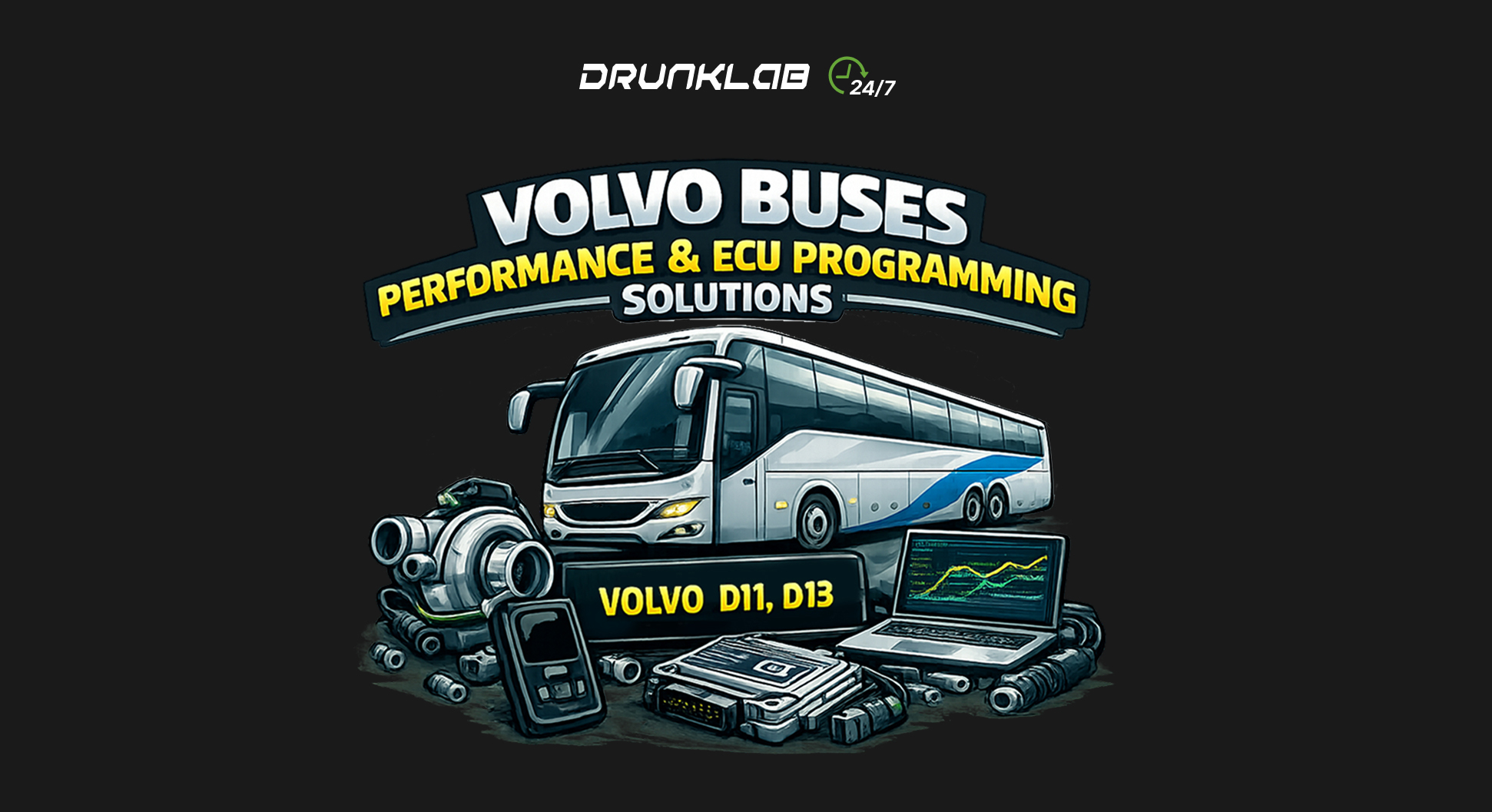
Professional Software Calibration for Volvo D8, D11, D13
Volvo buses are built for passenger comfort, safety, and long service intervals. From city transit fleets to long-distance coaches, Volvo platforms are engineered for reliability. However, with constant stop-and-go traffic, extended idling, urban routes, and strict emissions control — factory-configured aftertreatment systems often become the primary source of downtime and rising operational costs.
DrunkLab provides advanced ECU programming, emissions system optimization, and remote software solutions for Volvo buses worldwide — helping fleet operators restore efficiency, eliminate derate events, and improve long-term reliability.
Operational Challenges in Volvo Bus Fleets
Continuous Regeneration in Urban Duty Cycles
The load city buses carry on the highways, on average, is quite variable. The DPF system is unable to complete appropriate passive regeneration due to regular stops, shorter routes, and longer idling times. As a result, buses experience repeated active or parked regenerations, higher fuel consumption, excessive exhaust temperatures, and accelerated aftertreatment wear.
DEF / SCR System Instability
SCR systems in Volvo buses are extremely sensitive to NOx sensors, DEF quality, dosing modules, and temperature readings. Minor deviations can activate fault codes, trigger warning lights, and lead to a power derate, which disrupts schedules and the reliability of passenger services.
Unexpected Power Derate Events
When emissions thresholds are exceeded, the ECU limits engine output to protect the system. Transit operators view derate mode as a source of delayed routes, disrupted services, and unhappy customers.
Sensor Drift & Electronic Module Failures
Volvo buses rely on multiple temperature, pressure, and NOx sensors integrated with EMS (Engine Management System) and aftertreatment modules. Drifting sensors, incorrect measurements, and replacement of components that are still functional are usually caused by heat cycles, soot contamination, and vibrations.
Rising Maintenance Budgets
Repeated forced regenerations, DPF cleaning, SCR component replacement, and troubleshooting emissions-related faults significantly increase lifecycle costs — especially in high-mileage transit fleets.
Across most Volvo bus platforms, the engine itself remains mechanically durable. The majority of real-world failures originate from emissions systems and electronic controls.
Supported Volvo Bus EnginesDrunkLab
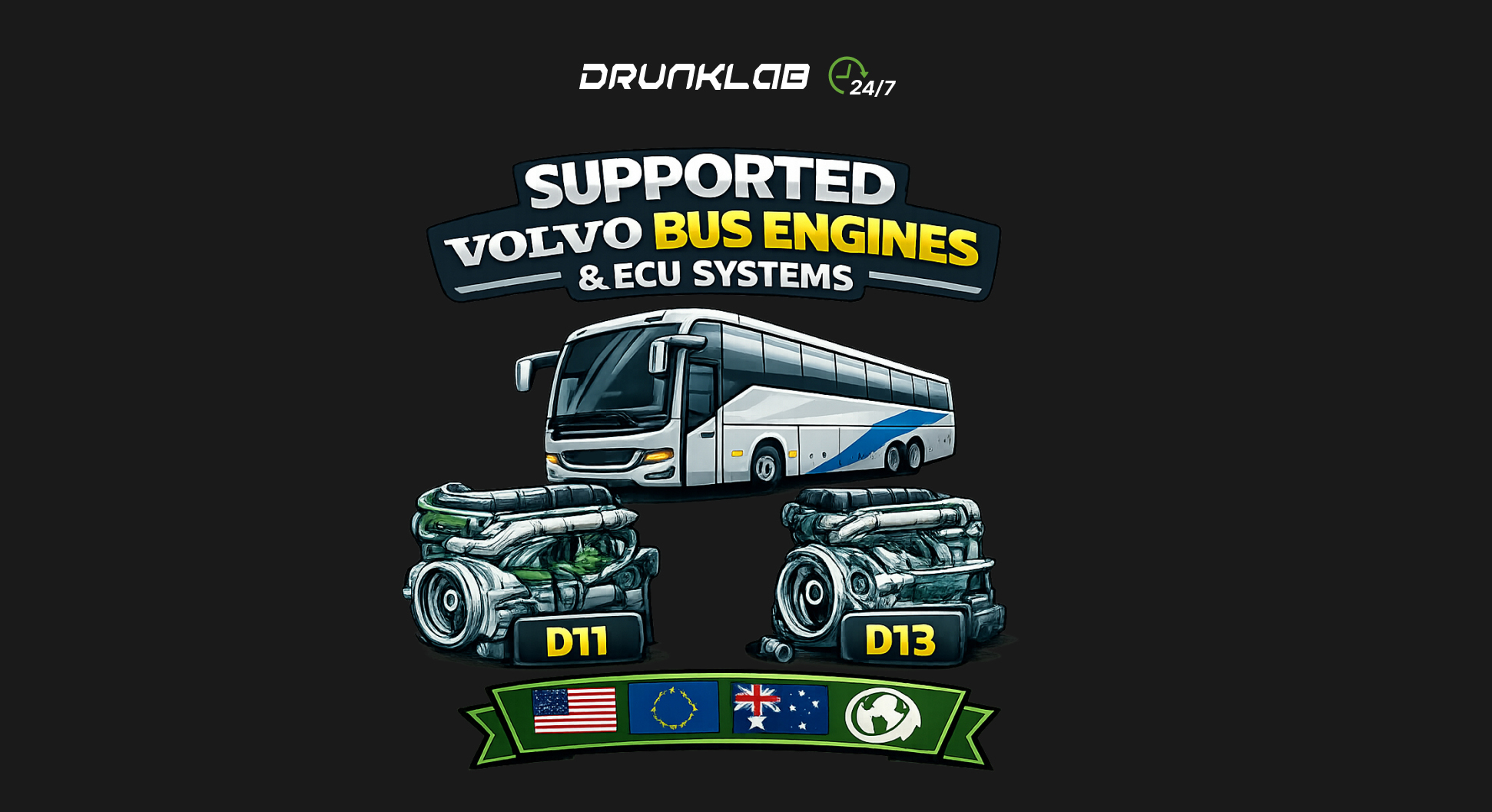
Supports a wide range of Volvo diesel bus platforms used in North America, Europe, Australia, and export markets.
Supported Engines
- Volvo D8K / D8C – Common in city and mid-size transit buses
- Volvo D11K – Used in coaches and BRT (Bus Rapid Transit) applications
- Volvo D13K – High-output intercity and long-distance platforms
Supported ECU Platforms
- TRW EMS 2.3 / TRW EMS 2.4 / Bosch EMS 4.x
Our engineering team works with both on-road transit fleets and private coach operators.
Volvo Bus Emissions Delete & ECU Optimization Services
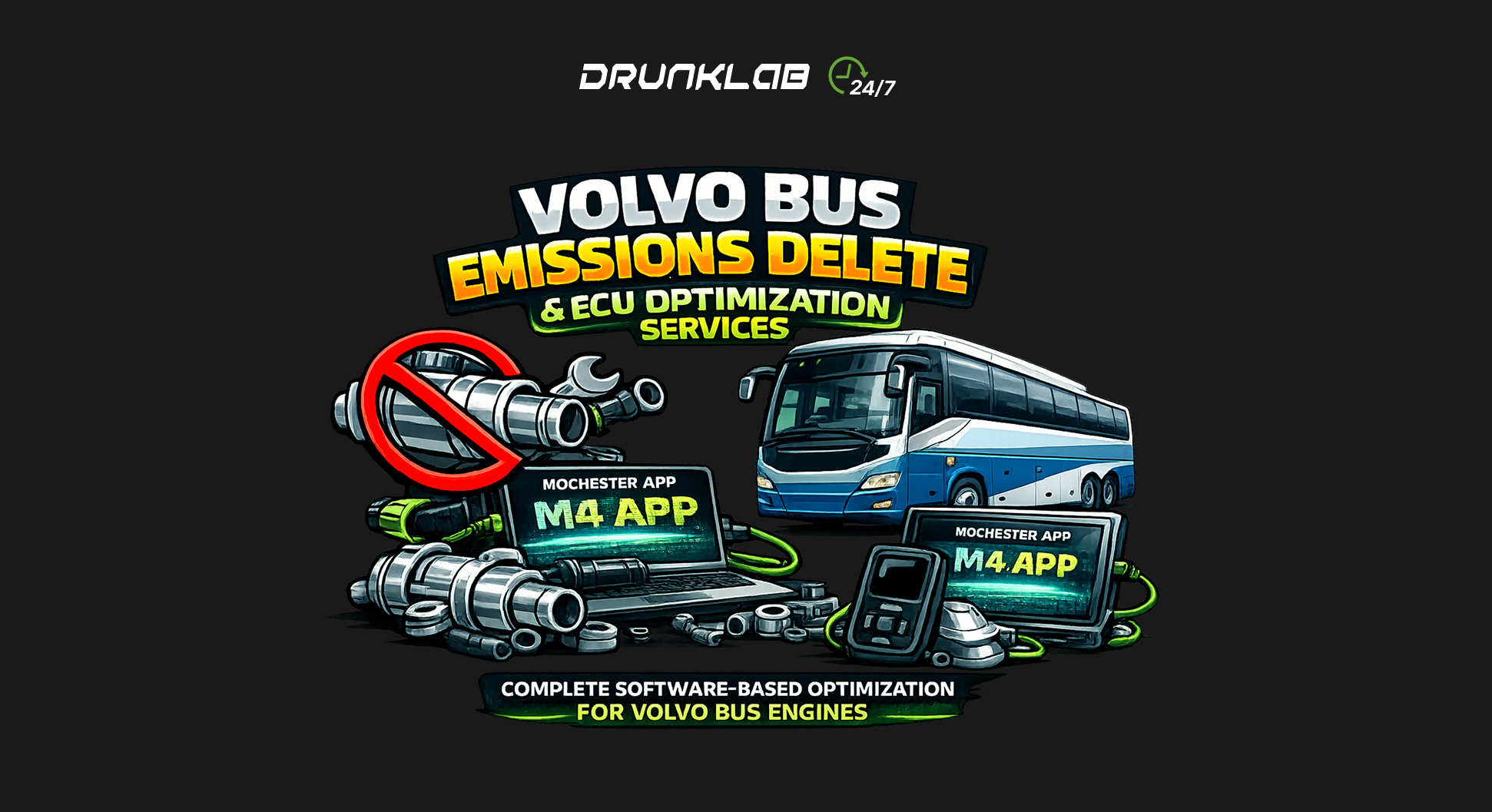
Using proprietary Mochester App (M4 App) technology and advanced diagnostic tools, DrunkLab provides complete software-based optimization for Volvo bus engines.
Available Services
DPF Delete (Software-Based)
- Disable regeneration logic
- Remove soot load monitoring
- Suppress DPF-related fault codes
EGR Delete (Software-Based)
- Disable exhaust gas recirculation logic
- Reduce intake soot contamination
- Improve combustion stability
SCR / DEF Delete (Software-Based)
- Remove DEF/AdBlue dosing dependency
- Disable NOx sensor feedback logic
- Eliminate DEF-related derate
Full Emissions System Delete
- Complete DPF + EGR + SCR/DEF software recalibration
- ECU remap optimized for torque and fuel efficiency
- Fault suppression and stable operating strategy
Performance & Efficiency Calibration
- Horsepower uprates (safe parameters)
- Torque curve optimization for urban routes
- Fuel economy tuning for long-distance coaches
- Stable EGT and boost control
All calibrations are built specifically for duty cycle: city transit, BRT, charter coach, school bus, or export operation.
Remote Volvo Bus ECU Programming — No Dealership Required
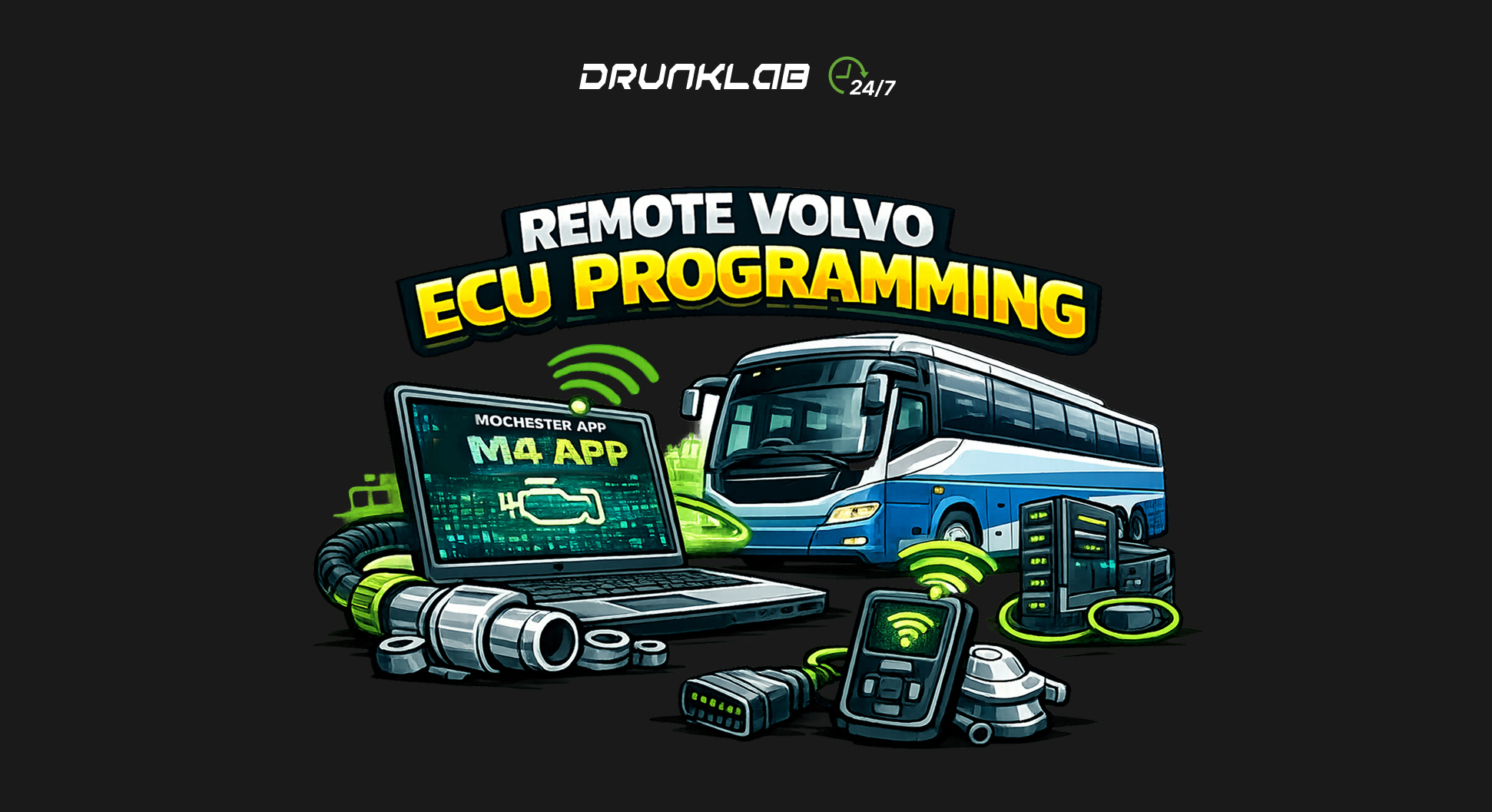
Traditional Volvo Tech Tool solutions require subscriptions, dealership access, and workshop downtime.
With the Mochester App (M4 App), DrunkLab engineers can connect remotely and perform professional ECU programming in under 30 minutes per vehicle.
What You Need
- Volvo bus
- Laptop/PC/VM with Windows Vista, 7, 8, 10, 11
- Communication adapter: 88890020, Voсom or ANY RP1210C (Nexiq USB-Link, Noregon DLA , DPA5, Inline, etc)
- Stable internet connection
No dealership visit. No waiting for factory appointments. No unnecessary downtime.
Advanced Diagnostic & Programming Capabilities
DrunkLab provides complete heavy-duty diesel software services, including:
- Free fault code reading
- ECU programming and flashing
- ECU stock
- Remote calibration adjustments
Our proprietary software ensures precision and stability without using unsafe or generic files.
What Is a DPF Delete on a Volvo Bus?
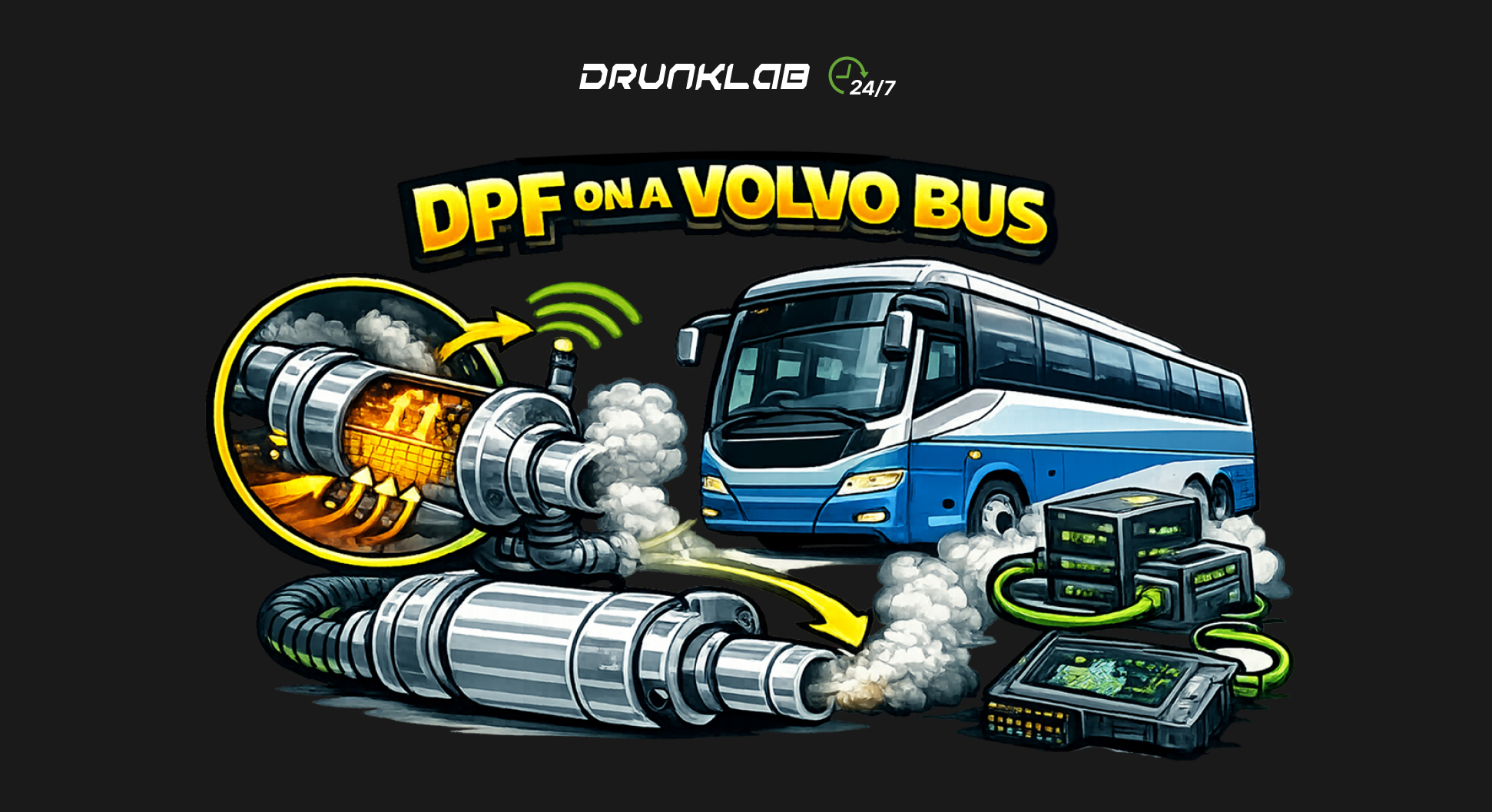
A Volvo Bus DPF delete is a professional ECU recalibration that disables diesel particulate filter logic inside the ECM (Engine Control Module). In urban transit operation, constant regenerations increase fuel use and heat stress.
After proper software recalibration:
- Forced regenerations come to a complete halt, eliminating the frequent interruptions and extra fuel burn that plague urban bus routes with constant stop-and-go operation.
- When high soot load warnings disappear from the dash alerts drivers less and creates less service interruptions when out on the road. This is especially helpful when they are working on tight transit schedules.
- Exhaust gas temperatures (EGT) stabilize at consistently lower and more predictable levels, reducing thermal stress on the turbocharger, engine components, and surrounding exhaust hardware for smoother long-term durability.
- Derate events triggered by DPF-related issues are fully eliminated, ensuring the engine delivers full rated power without sudden power limitations that cause route delays, passenger complaints, and lost revenue for fleet operators.
The engine operates predictably without regeneration interruptions.
What Is an EGR Delete?
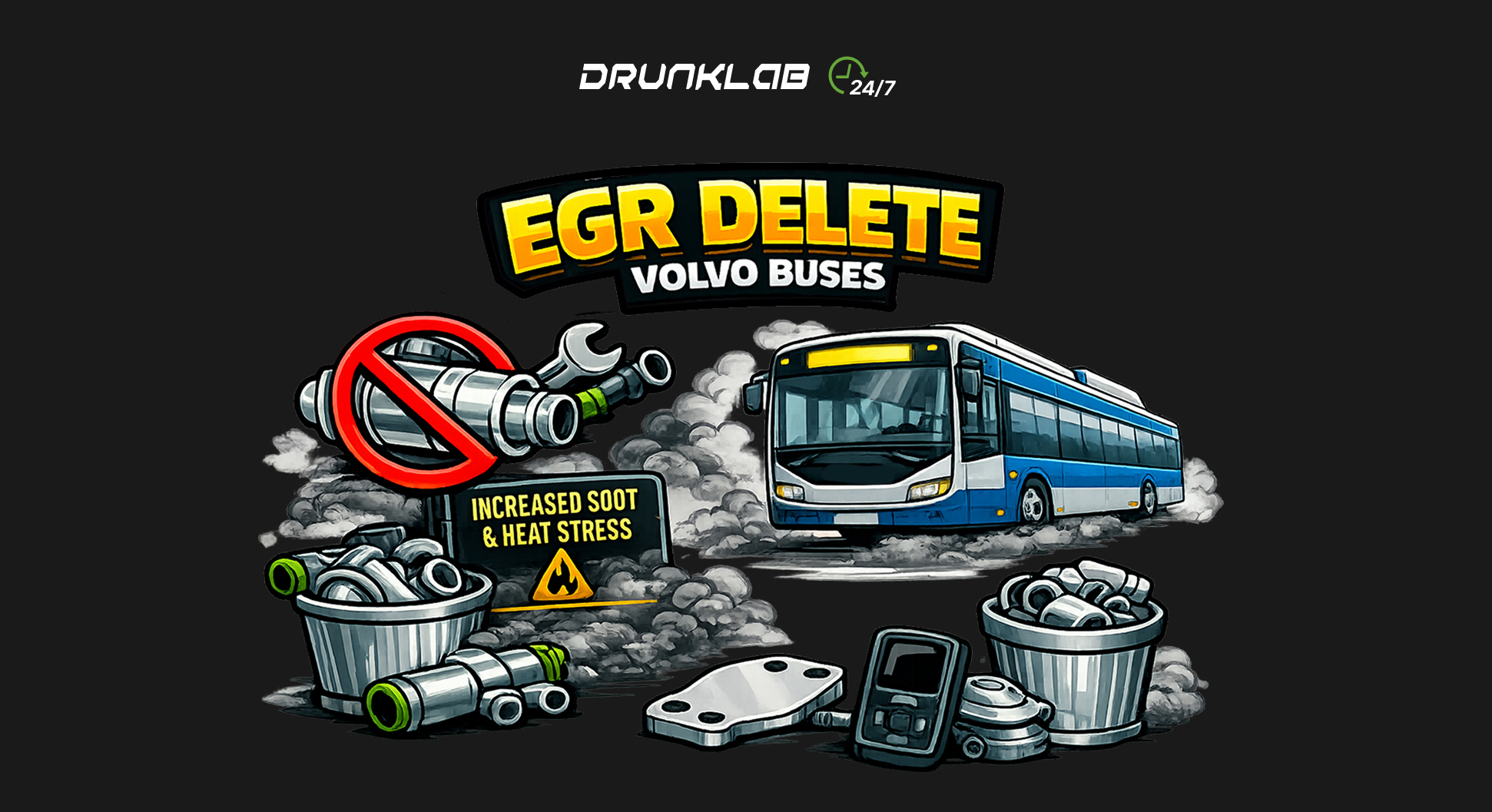
Volvo Bus EGR delete disables exhaust gas recirculation control logic in the ECU. In stop-and-go bus duty cycles, EGR significantly increases soot buildup.
Benefits include:
- Increased cleanliness of air intake — With no exhaust soot being recirculated, intake manifolds and valves remain much cleaner and have less carbon deposits.
- Improved throttle response — Fresher air gives sharper, quicker acceleration from stops and better control in traffic.
- Decreased soot contamination — Significant reduction in intake fouling, allowing for extended service intervals and reduced repairs.
- More stable combustion - A consistent mixture with adequate oxygen results in a smoother idle, a more stable torque output, and a reduction in unburned combustibles during stop and idle conditions.
These changes bring better drivability, less downtime, and lower maintenance for Volvo bus fleets in real-world operation.
What Is an SCR / DEF Delete?
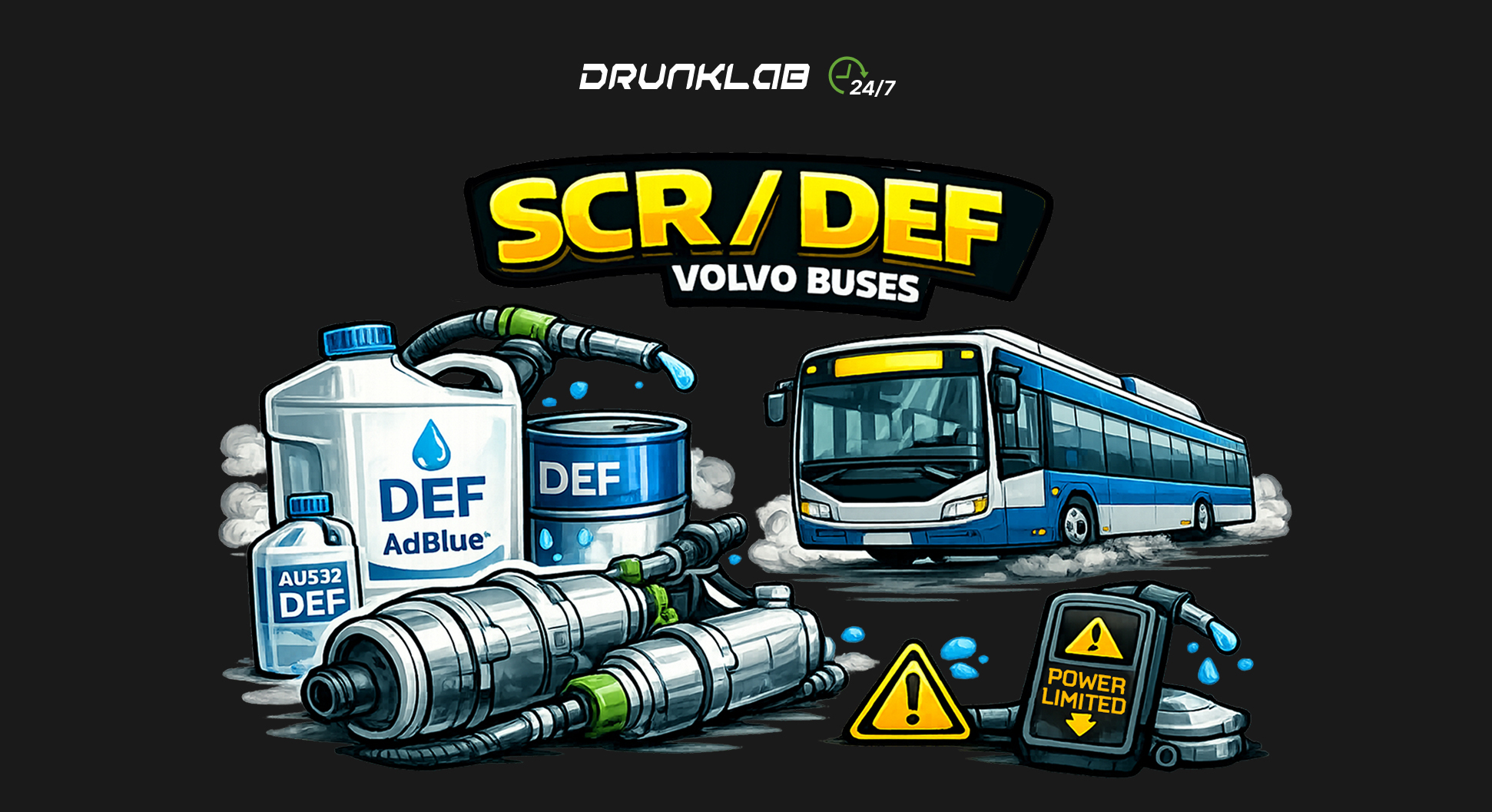
SCR systems depend on DEF/AdBlue dosing and accurate NOx feedback. When faults occur, buses can enter power limitation mode.
A SCR/DEF delete:
- An SCR/DEF delete completely eliminates the ongoing consumption of DEF (AdBlue) fluid, freeing fleet operators from the recurring expense and logistical hassle of sourcing, storing, and refilling this urea-based solution across an entire bus fleet.
- An SCR/DEF delete removes all NOx-related fault codes and associated dashboard warnings by disabling the sensor feedback loops and monitoring logic that constantly check for nitrogen oxide levels in the exhaust stream.
- An SCR/DEF delete stops emissions-based power derate events and ensures the bus keeps full engine performance and doesn't hit sudden limp mode restrictions that can leave vehicles stranded mid-route or delay passenger schedules.
- An SCR/DEF deletion increases overall reliability in cold weather and on routes where idling occurs a lot due to low temperature and low load operation that DEF systems to crystallize, sensors to freeze, dosing to fail, SCR reactions to be incomplete, and faults to be triggered causing unmodified Volvo buses to be down.
Global Remote Coverage
DrunkLab provides remote Volvo bus ECU tuning worldwide, including:
- United States & Canada
- Europe
- Australia
- Export markets
Our engineers analyze real-time ECU data and apply precise calibration adjustments remotely.
Legal Notice
Emissions system modifications are subject to local laws and regulations. Services are intended for export, off-road, racing, or controlled-use applications. Always verify compliance with regulations in your jurisdiction.
Why Fleet Operators Choose DrunkLab

With over 15 years of heavy-duty diesel software experience, DrunkLab supports Volvo, Mack, Renault, UD, Paccar, Cummins, Detroit Diesel, Volvo Penta, and more.
What sets us apart:
- Proprietary Mochester App (M4 App) platform
- Real-time remote diagnostics
- 24/7 live remote technical support
- Global service coverage
- Transparent terms and proven results
We don't simply alter software; we develop engineered, reliable, and tailored solutions for actual fleet operational realities.
Business & Performance Benefits
Well-calibrated tuning for ECUs in Volvo buses offers a distinct set of following operational benefits:
- Enhanced fuel efficiency - Removes unnecessary regenerations and DEF dosing, resulting in noticeable fuel savings on stop-and-go city routes.
- Stable torque delivery under passenger load - Removes emissions derates for smooth, consistent power and better performance with full passenger loads.
- Reduced downtime - Stops fault-triggered interruptions and forced regenerations, keeping buses on schedule and in service.
- Lower aftertreatment maintenance costs - Bypasses DPF cleanings, DEF repairs, and sensor replacements, slashing expensive emissions-related expenses.
- Extended engine service life - Minimizes long-term engine wear by cutting thermal stress and soot accumulation from disabled EGR/DPF.
- Greater fleet availability - allows for maximized uptime without unexpected derates or breakdowns, which positively impacts daily route coverage and ROI (Return on Investments).
For private coach companies and transit authorities, better optimization means more uptime and a better return on investment.
Volvo Bus Tuning Near Me?

No need to search for “Volvo bus tuning near me.”
DrunkLab provides worldwide remote diesel ECU programming. Thousands of satisfied clients trust our transparent process, guaranteed software stability, and professional engineering support.
Whether you operate a single coach or an entire city fleet, DrunkLab delivers professional Volvo bus ECU optimization directly to you — anywhere in the world.Have a questions? Our support team is available 24/7 via WhatsApp to assist you anytime.