Prevost
Prevost Coach Tuning Solutions
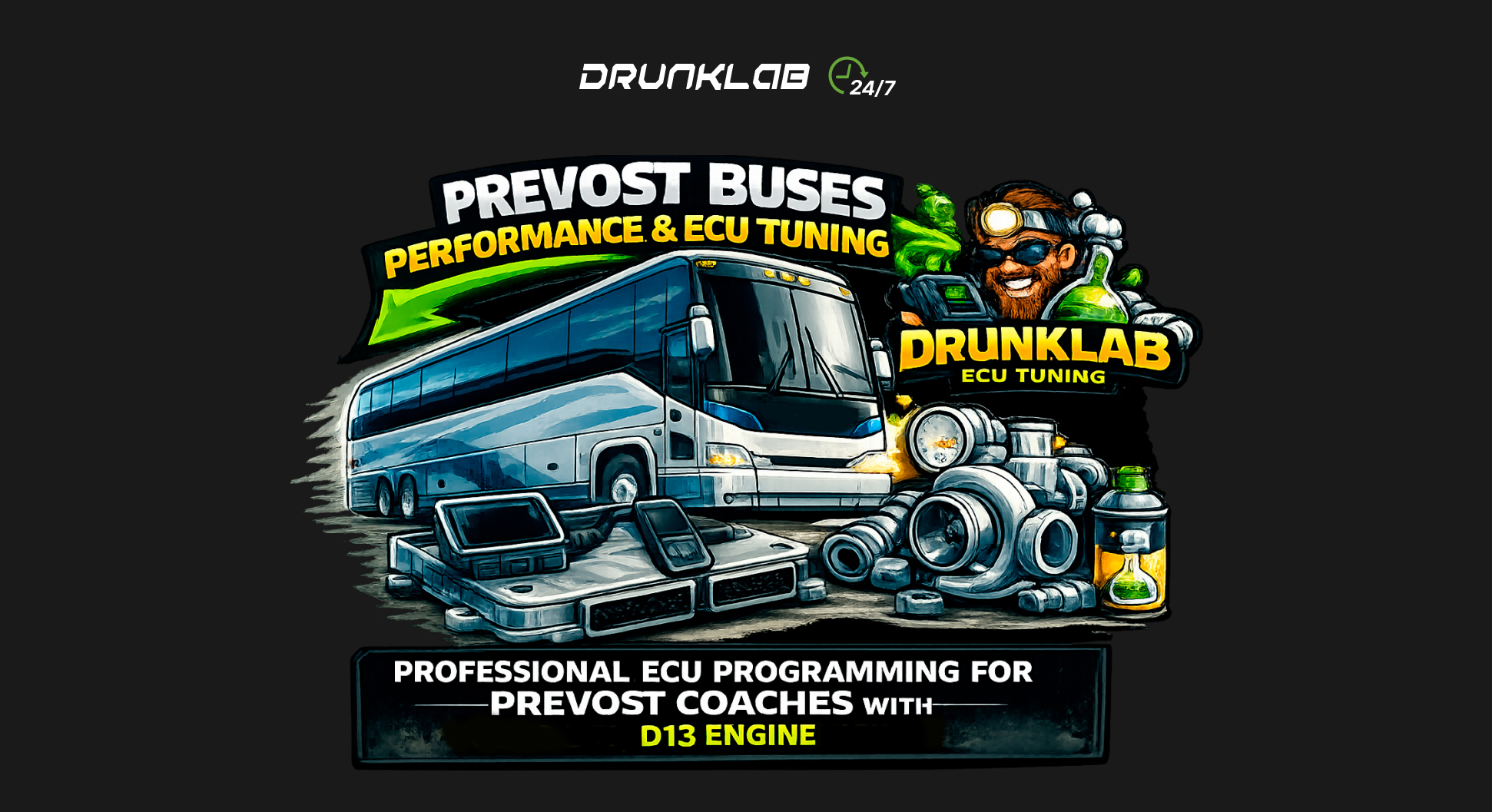
Advanced Software Optimization for Volvo D13 Powered Prevost Motorcoaches
Prevost motor coaches have a very distinct position within the passenger transport sector. Just as city transit buses have their specific purposes, the Prevost platforms are designed specifically for luxury charter operations, entertainer conversions, executive transport, and long-distance touring. These vehicles combine high-output Volvo diesel engines with premium coach architecture built for highway endurance.
Yet even the most refined motorcoach platforms face one recurring challenge: modern emissions control systems often introduce instability into otherwise robust powertrains.
DrunkLab specializes in professional ECU tuning and emissions system recalibration specifically for Prevost coaches operating in commercial, export, and specialty environments.
Why Prevost Coaches Experience Emissions-Related Downtime
Prevost buses typically operate in patterns very different from municipal fleets. A single coach may:
- Idle for extended periods at venues or hotels
- Operate under full passenger load on long highway grades
- Transition between urban congestion and open interstate routes
- Function in varied climates, from desert heat to sub-zero touring conditions
These usage patterns create unique stress on DPF, SCR, and EGR systems — particularly on Volvo D13 platform used in modern Prevost motorcoaches.
Unlike mechanical engine components, emissions electronics often become the weakest operational link.
The Hidden Cost of Regeneration in Luxury Motorcoaches
For entertainer coaches and charter fleets, idle time is unavoidable. However, excessive idle hours disrupt passive DPF regeneration cycles. When this occurs, the system initiates active or parked regenerations.
In real-world Prevost operation, this results in:
Increased fuel consumption during regen events
Active and parked regens burn extra gallons of diesel, noticeably raising fuel costs for idle-heavy charter and touring coaches.
Elevated exhaust gas temperatures
Repeated thermal stress is placed on the exhaust, turbo, and surrounding elements because regen cycles drive the EGTs significantly higher.
Frequent soot load warnings
Long idle periods block passive regen, quickly building soot and triggering frequent alerts or forced parked regens
Reduced vehicle availability
Unplanned regen waits and derates pull high-value coaches off revenue routes at the worst possible times.
Accelerated DPF aging
Repeated forced regeneration accelerates ash accumulation, cracking, and filter degradation, which shortens the DPF's life and increases maintenance costs.
To commercial operators, each forced regeneration is not merely a technical event, but rather, an event that represents a reduction in operational efficiency.
SCR / DEF Sensitivity in Highway Coaches
The primary focus on Selective Catalytic Reduction systems is on:
- Accurate NOx sensor feedback
- Stable DEF/AdBlue quality
- Consistent temperature control
- Functional dosing modules
In long-haul coach applications, minor deviations can trigger:
- Check engine lights
- Aftertreatment efficiency codes
- Torque limitation
- Limp mode activation
When a 45-foot luxury motorcoach enters derate on a touring schedule, the consequences extend beyond mechanical inconvenience — they affect client reputation and service commitments.
Volvo D13 in Prevost Applications
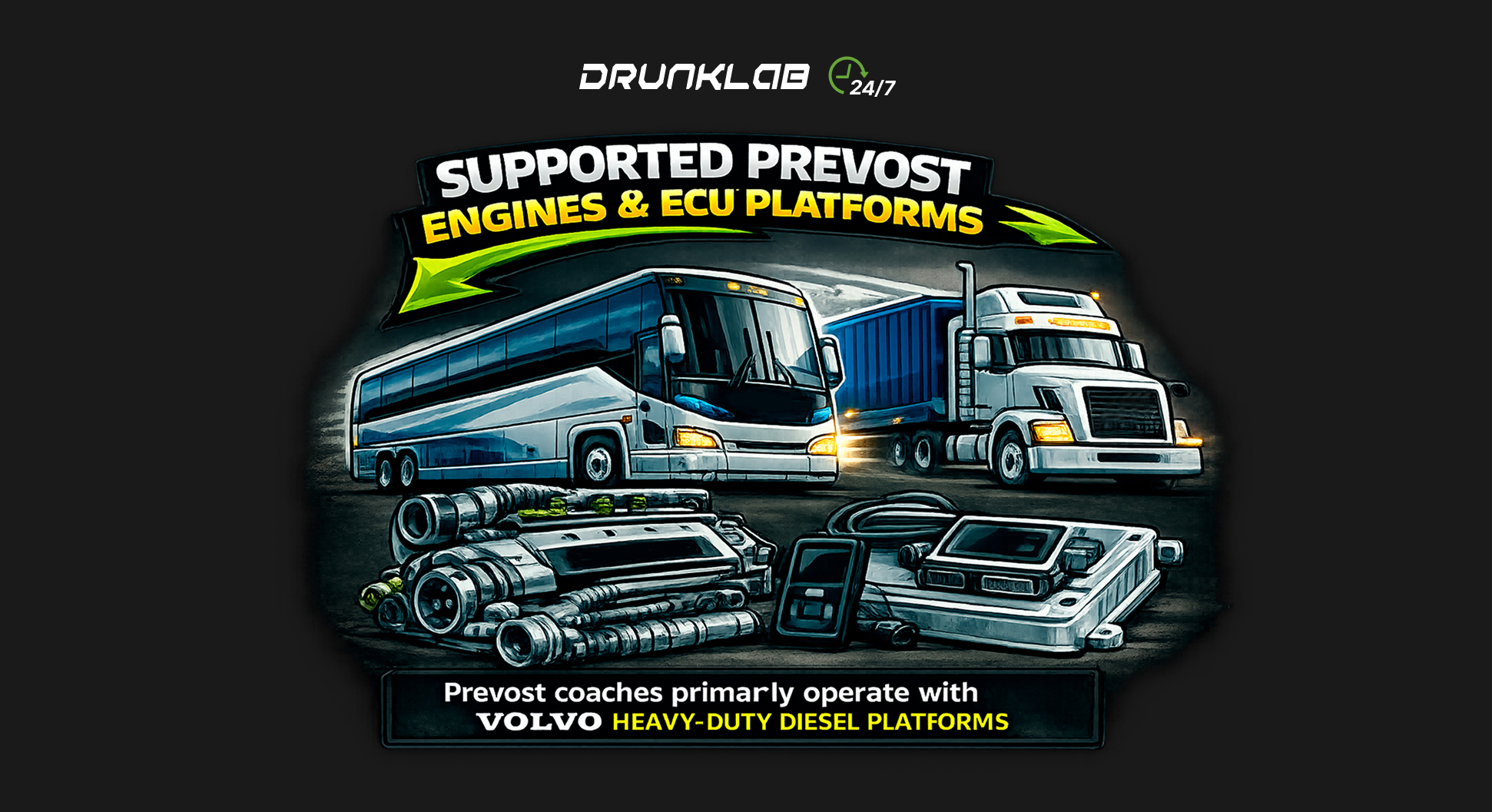
The D13 remains the most widely deployed engine in Prevost H3-45 and X3-45 models. It delivers smooth highway torque and strong load-carrying capacity.
Typical operational challenges include:
- DPF efficiency codes - Operators of the Prevost vehicles frequently deal with DPF efficiency codes that cause unnecessary alerts on the dashboard and force operators to perform diagnostics on interrupted charter/touring diagnostics.
- DEF dosing irregularities — Inconsistent DEF dosing disrupts SCR system performance, leading to aftertreatment efficiency faults, check engine lights, and potential torque restrictions that interrupt long-haul reliability.
- NOx sensors failure — due to aging or contamination—often fails to provide accurate readings and can result in multiple derate events and limp mode activations, which results in lost revenue as coaches are removed from revenue-producing routes.
- Derate during extended idle or high-load climbing — Emissions logic often imposes power-limiting derates during prolonged idle periods at venues or while climbing steep grades under full passenger load, severely impacting schedule adherence and client satisfaction in luxury motorcoach operations.
Mechanically, these engines are extremely durable. Software-managed emissions logic is usually the source of repeated interruptions.
Professional Prevost ECU Recalibration Services
DrunkLab provides software-based solutions designed specifically for motorcoach duty cycles — not generic transit bus files.
Our Prevost ECU tuning services include:
DPF Delete (Software-Based)
- Removal of regeneration logic
- Elimination of soot load monitoring interruptions
- Suppression of DPF-related fault codes
EGR Delete
- Disable exhaust gas recirculation logic
- Reduce intake contamination
- Improve combustion stability
SCR / DEF Delete
- Remove DEF dosing dependency
- Eliminate NOx sensor-induced derate
- Prevent cold-weather DEF complications
Full Emissions System Delete
Complete DPF + EGR + SCR recalibration for export, off-road, and specialty-use applications.
Highway Torque Optimization
- Improved throttle mapping
- Stable torque delivery under passenger load
- Controlled EGT management
- Enhanced long-distance drivability
All calibrations are engineered specifically for Prevost coach platforms and Volvo EMS systems.
Remote Prevost Bus ECU Programming — Worldwide Access
DrunkLab delivers global remote Prevost ECU tuning using proprietary Mochester App (M4 App) technology.
Supported regions include:
- United States
- Canada
- Europe
- Australia
- International export markets
Programming is performed remotely in approximately 30 minutes per vehicle.
Required equipment:
- Laptop/PC/VM with Windows Vista, 7, 8, 10, 11
- Communication adapter: 88890020, Voсom or ANY RP1210C (Nexiq USB-Link, Noregon DLA , DPA5, Inline, etc)
- Stable internet connection
No dealership scheduling. No factory subscription delays. No unnecessary downtime.
Understanding DPF Delete in Prevost Coaches
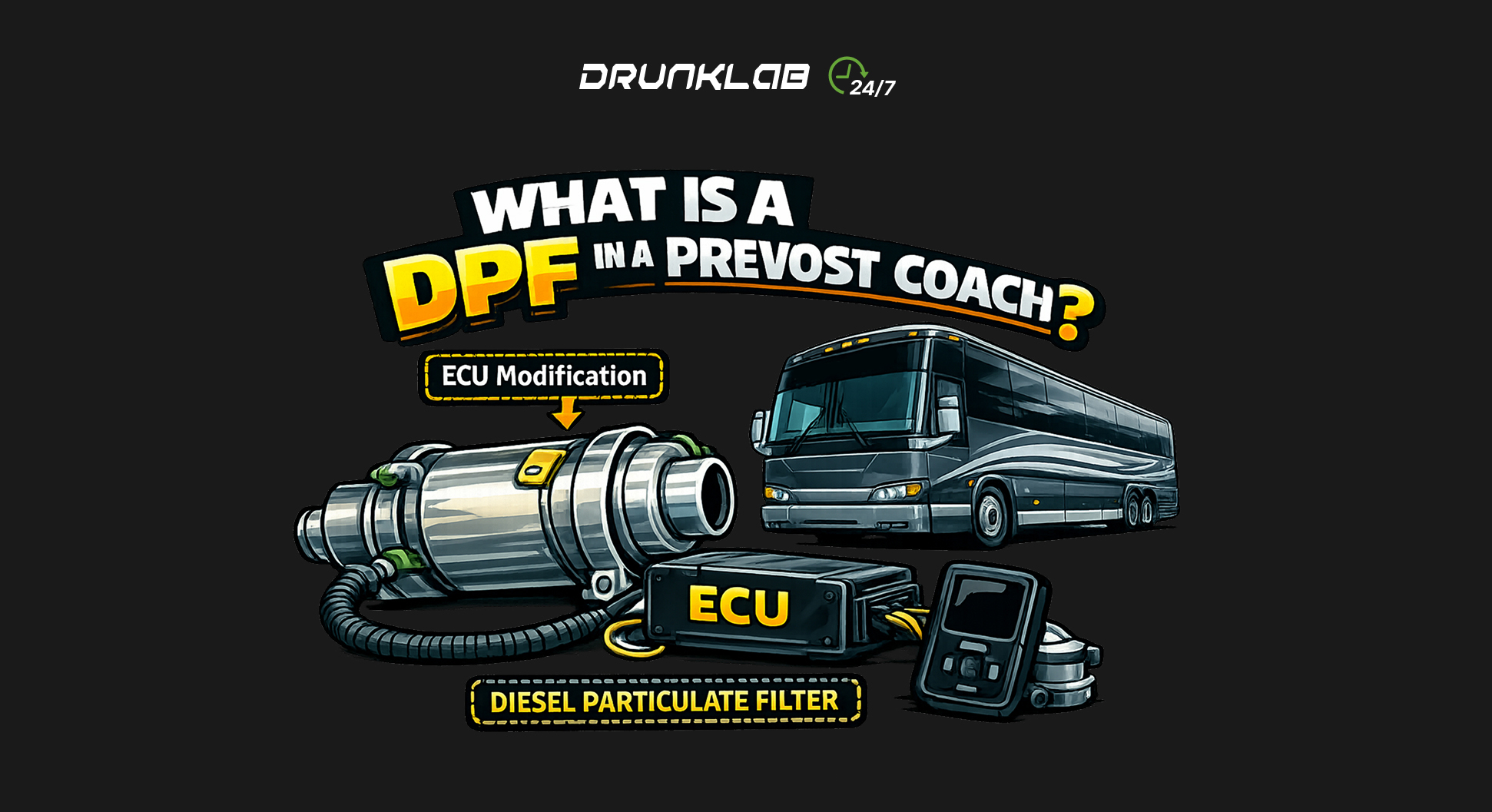
In luxury motorcoach applications, constant regeneration disrupts predictable operation. A professional DPF delete recalibrates the ECM to remove diesel particulate filter logic.
After recalibration:
- Active regeneration cycles stop, releasing the engine from forced fuel-consuming burns that disrupt service schedules, and permitting highway operation without interruption, even during long idling at locations or tour stops.
- Parked regen procedures are eliminated, removing the need for lengthy stationary downtime that strands high-value charter or entertainer coaches when soot levels trigger mandatory cleaning events.
- Differential pressure errors disappear, preventing recurring fault codes and dashboard warnings that otherwise force operators into unscheduled diagnostics or roadside stops.
- The thermal load stability of exhaust temperatures under load enables consistency of exhaust gas temperature (EGT) management relative to changing terrain and varied passenger loads. This reduces thermal stress on the turbochargers and other components and improves long-haul operations smoothness and predictability.
For coaches that spend hours idling before departures, this dramatically improves operational consistency.
EGR Delete Benefits for Long-Distance Touring
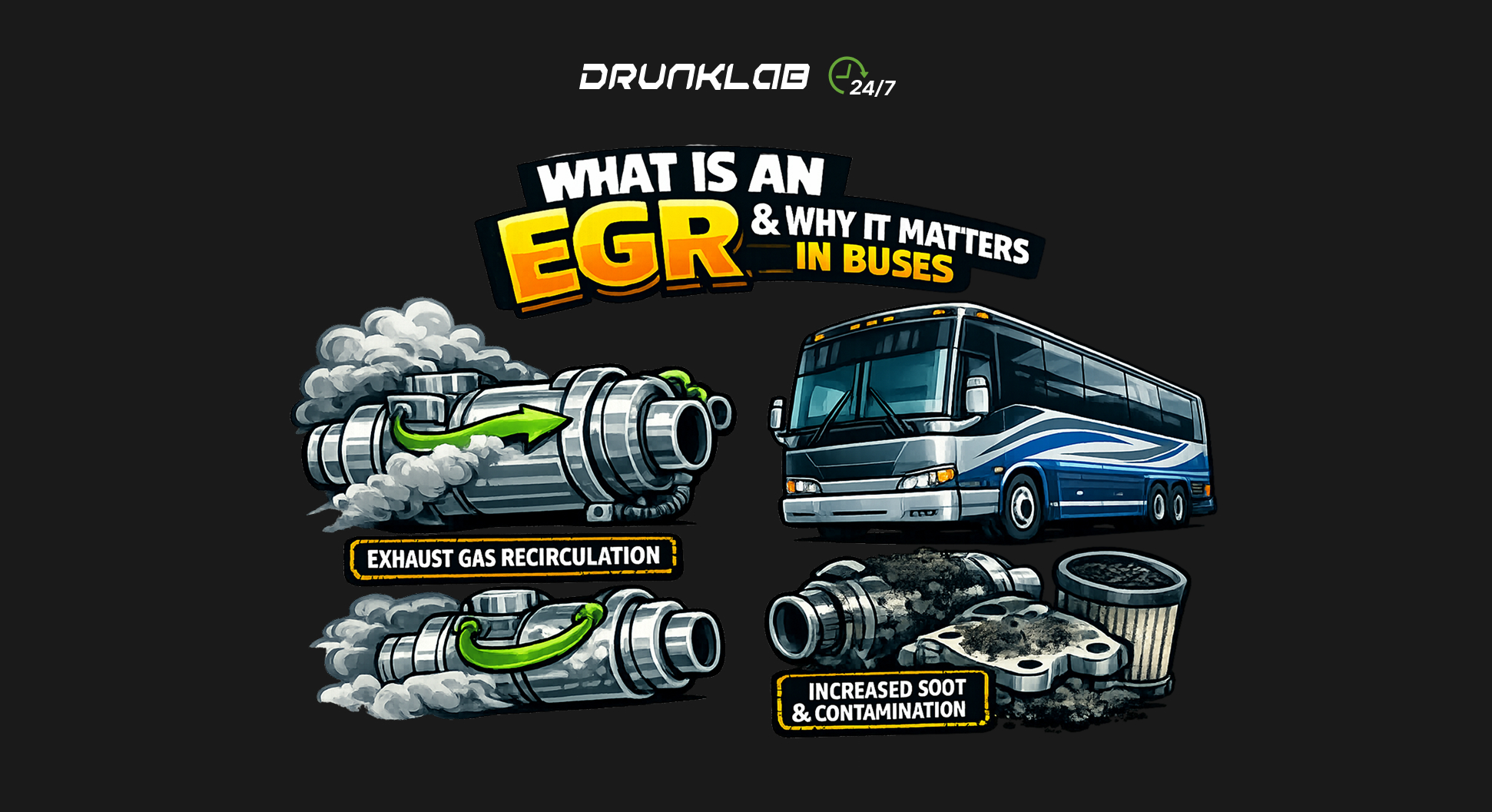
EGR systems recirculate exhaust gases into the intake system. In extensive touring cycles, this leads to soot build-up and contamination of the intake system.
Disabling EGR control logic provides:
- Improved airflow comes from the engine’s ability to take in only clean and fresh oxygen-rich air from the outside atmosphere rather than a slurred mixture of waste, hot, and exhaust-contaminated gases which leads to better combustion efficiency and reduced restrictions in the combustion process from the intake pathway.
- Removal of exhaust gas recirculation leads to less soot accumulation because there are fewer carbon-based particles depositing and building up on intake valves and turbocharger and manifold component walls. This keeps important airflow pathways significantly less dirty over thousands of miles on the highway.
- The engine's improved power delivery under load provides better throttle response due to the absence of recirculated exhaust and their associated thermal and volumetric inefficiencies. This helps increase steady-state cruising and grade climbing with full passenger capacity.
- Lower long-term engine wear by minimizing abrasive soot ingestion and thermal cycling stress on pistons, rings, valves, and turbo bearings, ultimately extending the service life of these high-dollar components in demanding Prevost motorcoach applications where annual mileage often exceeds typical heavy-duty thresholds.
For Prevost fleets operating high annual mileage, long-term reliability becomes a measurable advantage.
SCR / DEF Delete in Commercial Coach Operation
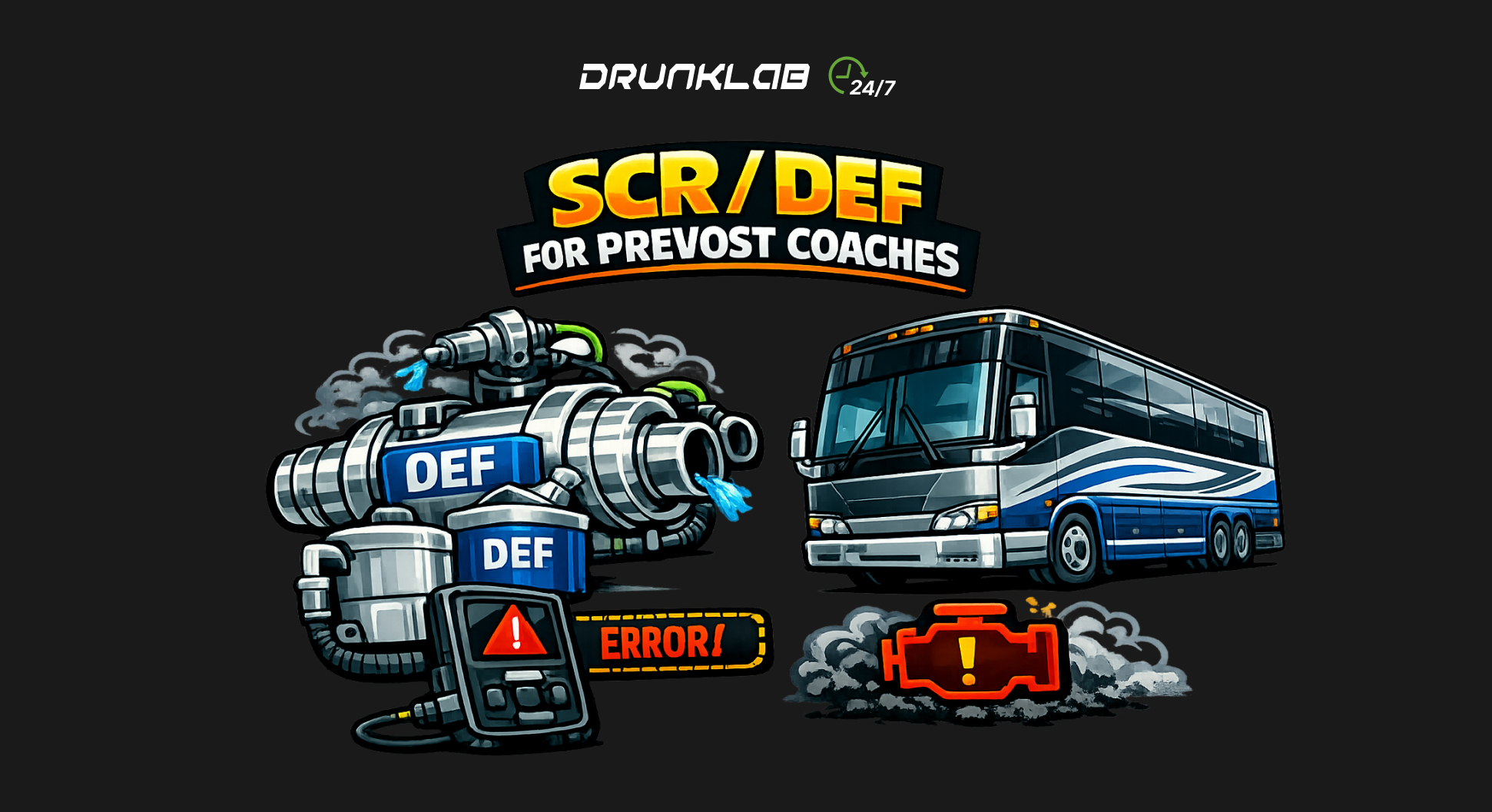
SCR systems depend on precise DEF injection and sensor feedback. Inconsistent readings frequently trigger protective torque limitations.
A properly engineered SCR delete removes:
- DEF consumption dependency, eliminating the constant cost and hassle of sourcing and refilling DEF on the road.
- Dashboard alerts and codes can also be caused by minor changes of sensors or temperature variations and of course faulty triggers of NOx-related warning cycles.
- Emissions-based limp mode, keeping full power and torque available during heavy loads or long idles.
- Interruptions from sensor drift and gradual power loss and downtime due to aging or contaminated NOx sensors.
In some environments with controlled uses, reliability surpasses the importance of even the most sophisticated, operational control compliance mechanisms.
Fleet-Level Benefits of Prevost ECU Optimization

Properly calibrated ECU tuning provides benefits beyond just improved performance.
Fleet operators report:
Enhanced fuel efficiency on highway routes
Removing regeneration cycles and EGR (exhaust gas recirculation) restrictions improves miles per gallon (MPG) while cruising on long haul journeys.
Reduced aftertreatment maintenance expenses
No more DEF purchases, NOx sensor failures, or frequent DPF cleanings and regens.
Fewer roadside service interruptions
Emissions faults, derates, and limp mode events are removed, keeping coaches on schedule.
Greater operational predictability
Stable torque, consistent EGT, and reliable performance across idle-heavy days and heavy loads.
Extended service intervals
Cleaner intake and no regen stress mean longer time between major engine services.For charter and entertainer fleets, uptime directly correlates with revenue.
Why Prevost Operators Work with DrunkLab
- 15+ years of heavy-duty diesel ECU experience
- Deep specialization in Volvo-powered platforms
- Proprietary Mochester App remote technology
- Custom-built calibrations (not generic files)
- 24/7 remote technical assistance
- Global service coverage
We understand the mechanical architecture of Prevost coaches and the electronic complexity of modern EMS-controlled engines.
Legal Notice
Emissions system modifications are subject to local regulations and compliance requirements. Services are intended for export vehicles, off-road use, racing, and controlled applications where permitted by law. Operators must verify regulatory compliance within their jurisdiction.
Looking for Prevost Bus ECU Tuning Near You?
DrunkLab provides worldwide remote diesel ECU programming for Prevost motorcoaches — delivering stable software solutions directly to your fleet location.
From DPF delete and SCR delete to complete Volvo D13 ECU optimization, we provide precision-engineered calibration tailored for real-world motorcoach operation.
DrunkLab - Tuning Accessible to Everyone!